

It is the time of the year, when organizations and teams start to work with yearly planning. One of the challenges many organizations struggle with is the gap between strategy and development portfolios – something seems to be missing between!
Ensuring strategy implementation via development portfolios challenging in many organizations
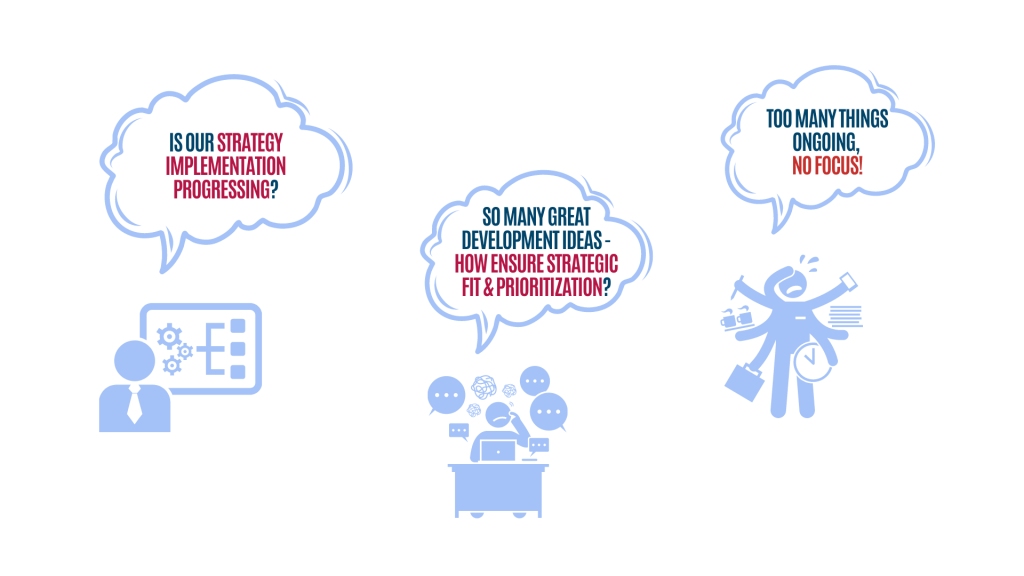
The challenge is often threefold. Strategy teams deploying company strategy may be struggling with how to measure and follow up on strategy progress – are we on a right track and what is happening in development portfolios? Portfolio owners and managers may be struggling with what the strategy actually means for our development portfolio – is it concrete enough to guide development prioritization decisions? And as a result, if no clear portfolio-level prioritization is provided, development teams and experts tend to have too many things ongoing and lack focus.
There are many great approaches to take strategy into action, such as strategic goals or themes, must win battles, hoshin kanri, and strategic transformation programs. One practical tool to close the gap between the strategy and development is Objectives and Key Results (OKRs). OKRs are part of lean and agile tool box and also Scaled agile framework, but also a great tool for any development portfolio.
I had a great opportunity to learn about OKRs last year, when we were deploying OKR practices with different development portfolios and teams in a global company. Thank you so much for Mirette Kangas and different portfolio teams for the great learning journey! I will go through some of the key learnings here:
What are Objectives and Key Results (OKRs)?
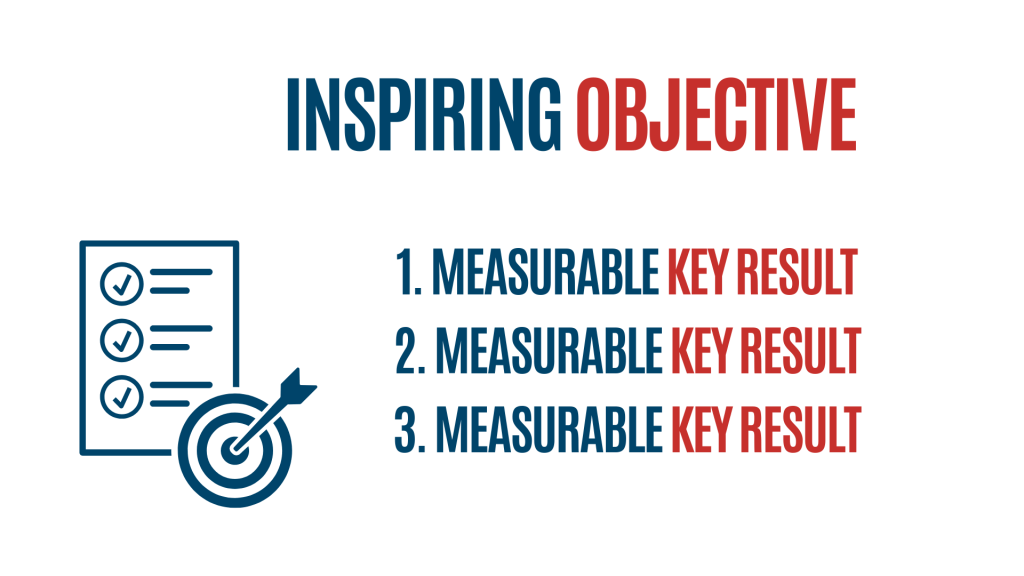
The idea with Objectives and Key Results is easy and intuitive – we define inspiring objective combined with measurable key results.
What should Objective look like?
- Inspiring – this is what the bright future looks like for us!
- Ambitions – stretching our comfort zone, we are really proud to achieve this goal!
- Concrete and action oriented
- Only 1-3 objectives (max 5) to create clear focus
- Linked to strategy, vision and mission
- Short and and precise
- Can be defined for a specific time, e.g. quarterly or yearly based on portfolio needs
How about Key results (KR)?
- Defining, how to get to the objective
- Measurable (number, yes/no…), baseline and target defined
- 1-3 key results to be defined per objective (max 5)
- Defined typically together with the team
- Owner defined
- Linked to portfolio initiatives and tasks, but NOT a task or project
- Often defined for per quarter, but also yearly cycle may work well in portfolio context
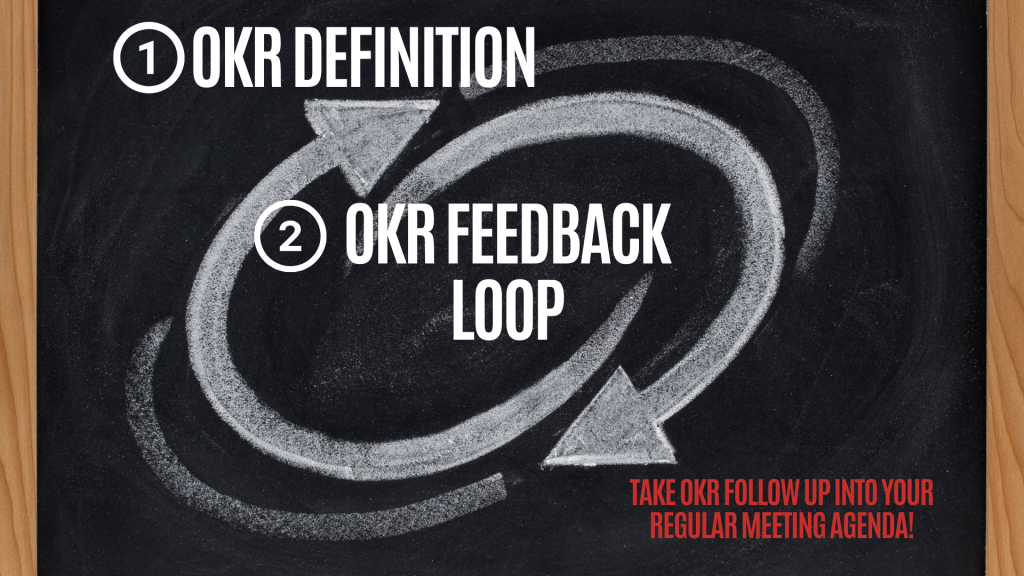
Feedback loops – this is where the magic happens!
There is a great value in OKR definition – OKRs can be used for inspiration, communication, and alignment. However, the real value comes from the regular feedback loops – how are we progressing and are we doing the right things to achieve our Key results? OKRs should not be yet another thing, but they should be included into the standard meeting agendas to be followed up systematically.
How can you link OKRs to a development portfolio?
Objectives and key results may be defined for a development portfolio to create clarity and focus and support with the prioritization decisions. Clear portfolio level objectives are an important tool for communication towards development teams, but also to create alignment across business units and portfolios. Key results on the other hand are extremely powerful tool to measure how we are progressing during the year – are we achieving our key results or would we need to take special actions?
Often, OKRs may be really helpful also for large transformation programs – what does to good look like for us and how do we measure it in practice. OKRs may be also a great tool for unit, team or individual levels – just to ensure, there are not too many OKRs defined for the same scope or content to avoid confusion!

One of the challenges I have had when defining OKRs is that I start to think immediately about practical projects or tasks – of course, that is part of my profession! However, I try to think key results more from the outcomes view point – and then link actual development on how do we implement our key results. If work cannot be linked to any of key results – is really needed in the portfolio scope?

How to get started?
- You can try out OKRs for your personal development – it is a great tool to really think what you want to achieve, and how you would know if you are there? Have regular feedback loops to see if you are going to the right direction. Learn and fine tune your OKRs!
- Defining great OKRs takes time and usually several iterations – allow time for learning with your team
- If you are implementing OKRs within your organization, start with one area or unit, gather learnings and scale up based on the learnings
- Include OKRs as a part of normal governance and meeting routines – this is how feedback loops will not be forgotten
- OKRs can be really simple and elegant, do not make it too complex or scientific!
Do you want to learn more?
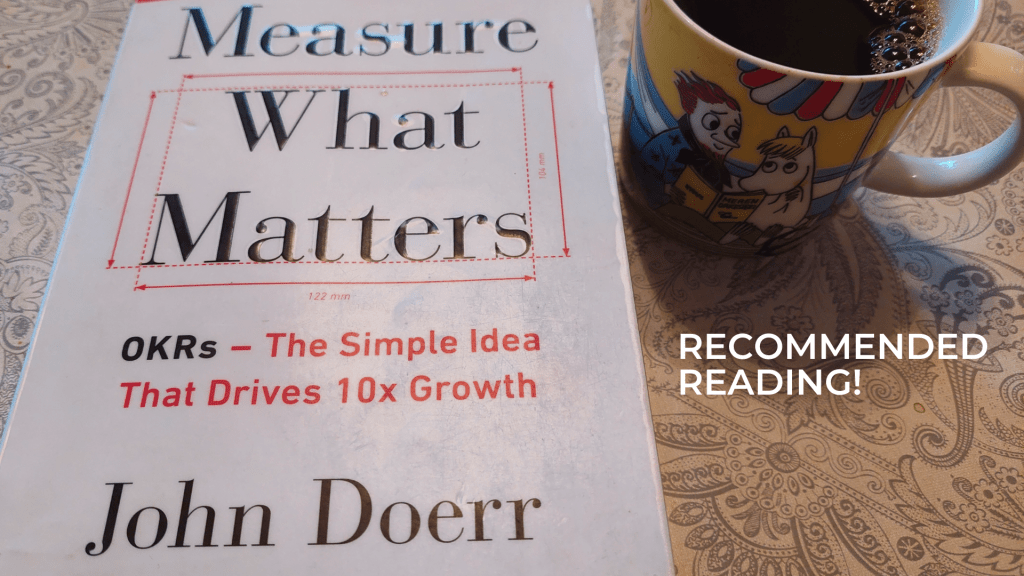
If you want to learn more, would recommend for any leader Measure What Matters by John E. Doerr!
Applying OKRs in the Scaled Agile Framework
For Finnish speaking colleagues a really nice book also available by Juuso Hämäläinen and Henri Sora: Strategia arkeen OKR-mallilla
I will consolidate later also learnings from some case studies. Here are couple of academic studies which might be interesting:
Using OKRs with Balanced Scorecard
OKRs as a results-focused management model: a systematic literature review
 Strategic Portfolio Management
One thought on “Closing the gap between strategy and development portfolios using Objectives and Key Results (OKRs)”