

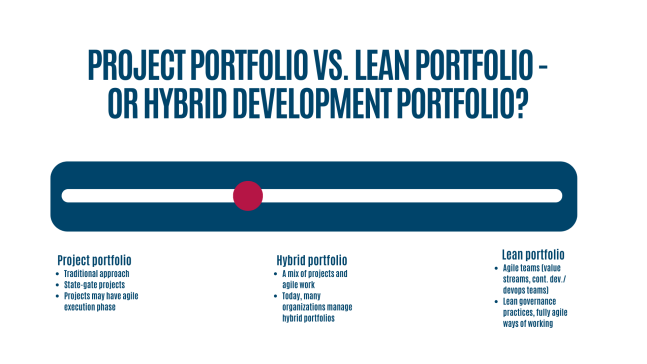
Many companies have well established practices for managing project portfolios. Projects are followed up and governed based on the stage-gate model – and portfolio may include for example a collection of projects, programs, and other activities. There is an own standard for project portfolio management (PPM), which has been taken widely into use.
On the other hand, agile practices and continuous development teams have become more and more common. Popular Scaled agile framework (SAFe) has introduced a great set of practices for Lean portfolio management (LPM) – in SAFe development is organized via value streams and executed fully in agile mode.
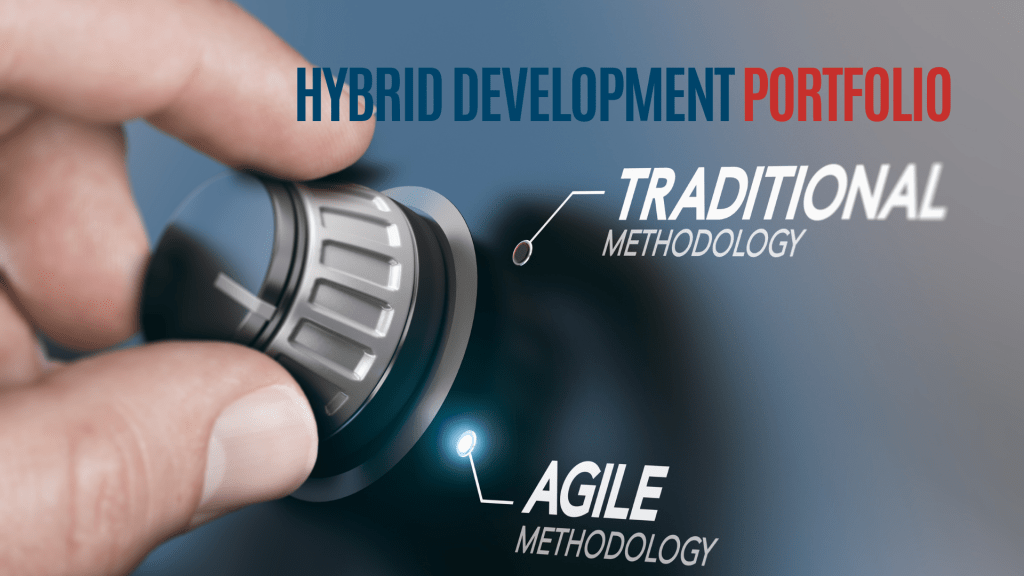
However, most of the organizations are somewhere between – having still plenty of projects (often with agile execution), but also continuous development executed by the agile teams, continuous improvement or devops teams. Where is your organization now, somewhere in between? Where would you like to be in the future?

Typical challenges for hybrid portfolios including projects and agile work
Managing a hybrid portfolio including projects and agile work is not completely straight forward – there are typically several challenges from the development portfolio view point:
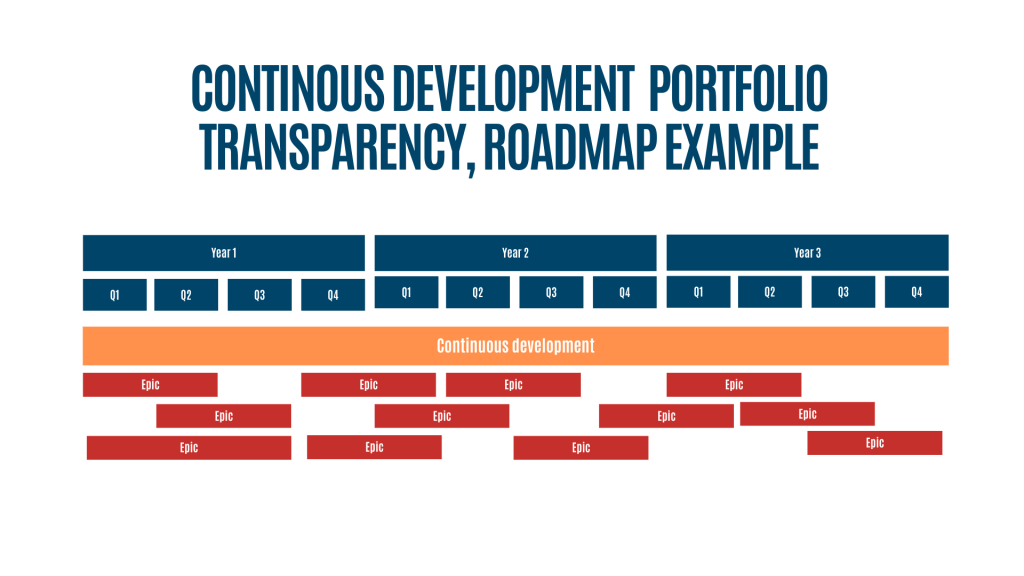
- Transparency – project portfolio includes projects, but continuous development may lack visibility in terms of development roadmap, outputs, outcomes and benefit tracking
- Finance – Stage gate projects have gate approvals for financing decisions, where as agile teams have other means for prioritization and allocation of finances; also company budgeting and cycles may be sometimes conflicting with lean budgets and guardrails
- Governance – practices are quite different in traditional project steerings, when compared to quarterly practices many agile teams are committed to
- Ways of working – Different units within company may have different ways of working, e.g. some units have adopted agile ways of working, where as others are still working with project models – also project may need work from many continuous development teams
I will go through some practices, which have been helpful when managing hybrid portfolios:
Building MVP with a project and ramping up continuous development capabilities
When developing something completely new, for example a new IT solution or getting started with a new innovative product or service, there may not be a continuous development team available, who could take the lead on development. In these cases, it has been a good practice to build Minimum Viable Product (MVP) and capabilities to start continuous development during the project phase – project resourcing is helping, as it may take some time to define the concept, hire team members, select technology and make needed decisions. This works especially for hybrid portfolios, where both models are actively used.

Another case, where projects have been helpful are complex process or technology changes, where development is needed from many different teams and there is a lot of integrations or changes in business processes, and project may be combining business and technology development across different areas together. Also, if the people side of the change is significant, and the there is need for deployment within the units, rollout project with systematical change management approach may help a lot.
Creating transparency to continuous development
Even though continuous development teams prioritize content via backlogs or Kanban boards, there is a need to communicate towards a wider group of stakeholders what are the key themes or epics continuous development team is focusing on. This is especially important for teams serving many business units, to create trust and transparency. One option is to create high level transparency to continuous development roadmap also in the portfolio level – without going to too detailed level.
Great Lean portfolio management practices for hybrid portfolios
Scaled agile (SAFe) includes an extensive framework of practices for lean portfolio management. Here are couple of practices, which I feel work very well even for hybrid portfolios, have a look!
- Portfolio vision & canvas
- Strategic themes
- Quarterly portfolio reviews
- Epics
- Measuring portfolio performance
- Forecast and budget dynamically
- Guardrails for financial decision making
- OKRs (see the previous post about OKRs for development portfolios)
If you have good tips to share for managing hybrid portfolios, I would love to hear from you!
 Strategic Portfolio Management
3 thoughts on “From project portfolios to hybrid portfolios – combining projects and agile work”