

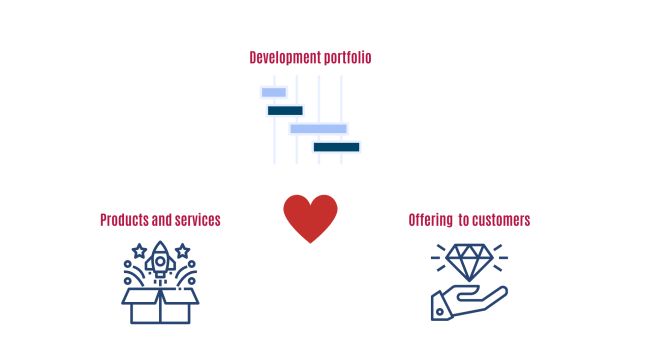

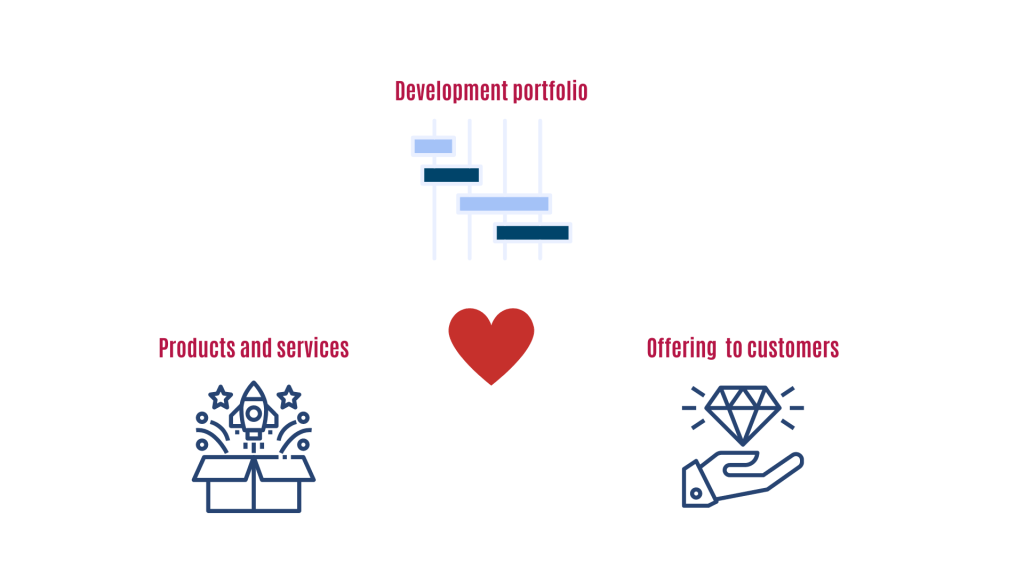
Strategic development portfolios include often the development of new products and services and the introduction of new offerings to the markets. Traditionally projects have been widely used in new product development, to ensure systematical development process and quality. Today, also agile development practices have become common – instead of focusing on project gates, the focus is on development outcomes – products, services, and sellable offerings.
Do you manage product portfolio, offering portfolio or both?
Product development teams are introducing new products, features, and functionalities via regular product releases – there may be physical hardware components, software, and services included. The product portfolio is also linked to product life cycle management – new products are introduced, further developed, and old ones are retired. In parallel to product portfolio, business teams are also looking into offering viewpoint – how to price, sell, package, and servitize customer offerings.
Definition of products, services, solutions and offering differs from company to company. However, there may be need to manage these different viewpoints:
- Product roadmap – new product releases, hardware, software and service development, dependencies between development entities, enabling product deliveries via the supply chains and service operations
- Offering roadmap – sellable offering towards different customer segments, which may be bundles of physical product features and services combined with new pricing and business models
Sometimes these viewpoints may be the same, but often both are needed in parallel. Even the best product will not be a success without good commercialization work and the other way around – even though the business model would be perfect for the new offering, if the physical product does not meet customer requirements, the offering will never be successful.
In large global companies, offering may also vary significantly from geographical area to another, from country organization to another. Furthermore, the needs for offering development may vary from area to another, and also when planning and prioritizing new offering and product development, different types of roadmap views may be needed.
New product development portfolio management
In the context of scientific literature, new product portfolio management is its own field of study. Cooper et al. (2002) define new product development (NPD) portfolio management with similar terms as portfolio management is typically defined:
Portfolio management is a dynamic decision process, whereby a business’s list of active new product (and R&D) projects is constantly updated and revised. In this process, new projects are evaluated, selected, and prioritized; existing projects may be accelerated, killed, or de-prioritized; and resources are allocated and reallocated to the active projects.
Good practices for product portfolio management
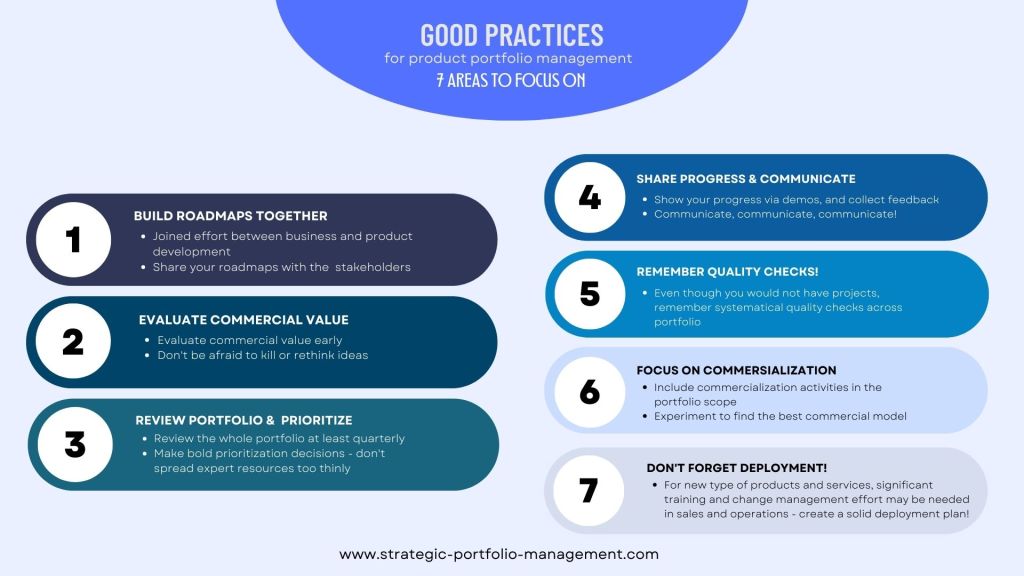
I will list key things, which I learned are really important, when managing development portfolio including new products and services – I hope these are useful for you:
- Build roadmaps together – building a roadmap is a joint effort between business and product development teams. Even though part of the content may be confidential or secret, sharing roadmaps with the key stakeholders is really important to create alignment.
- Evaluate commercial value early and do not be afraid to kill or rethink ideas. Sometimes it is difficult to make a killing decision, but this is part of good portfolio management. Service design can provide great tools to understand customer needs better.
- Regular prioritization – review and prioritize your product development portfolio regularly. Monthly or quarterly cycles work well in many organizations. Make bold prioritization decisions – if you try to do too many things at the same time, expert resources may be too thinly spread around impacting negatively your portfolio success.
- Create transparency via demos and regular communication – show your achievements and share progress with your stakeholders, and leadership – and receive feedback!
- Remember quality checks – even though development would happen via agile product development and project quality gates are no longer applied, ensure certain quality checks are done systematically across all products in the portfolio and quality checks are inbuilt into your process.
- Focus also on offering development and commercialization – even the best product will not be successful without good business model. Experiment and learn what works – for example growth hacking has great tools for this part!
- Don’t forget deployment! If you are introducing completely new types of products or services with new business models, significant process and tooling development, as well as training and change management effort are needed. If you are introducing incremental changes to existing products, remember still the importance of great communications materials to make best out of your product releases or launches!
Additional reading
Cooper, Edgett, Kleinchmidt: Portfolio management for new product development: Results of and industry practice study, December 2002, R& D Management 31(4):361 – 380
Jarno Vähäniitty’s doctoral thesis from 2012 was focusing on agile product and portfolio management. Literature review and results provide good insights:
Jarno Vähäniitty: Towards agile product and portfolio management, 2012, Aalto University publication series DOCTORAL DISSERTATIONS, 15/2012
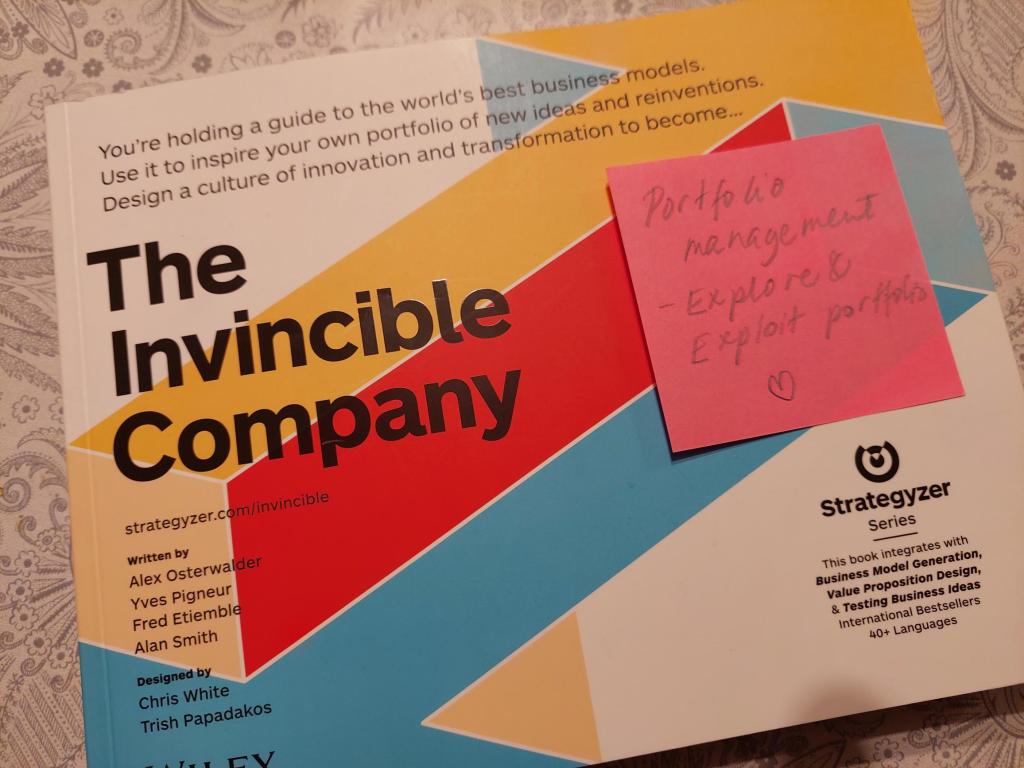
Extra tip for additional learning: Explore and Exploit portfolios from Strategyzer – The Invincible Company
I will later come up with a post focusing more on literature related to new product development portfolio management and one of my favorite topics – servitization and developing complex hardware-software-service systems!

 Strategic Portfolio Management