


There are many ways to look into offering portfolios, and I tried to summarize different viewpoints and dimensions, which may be helpful for communication. The challenge may be, that there are many different needs to group or categorize the same offering. Also, the viewpoints when looking into Strategic Development Portfolio developing new offering and available offering portfolios are quite different!
I started to look into my notes from my MBA studies and found many different dimensions which may be relevant. Let’s look into different dimensions – and I would love to hear also how you see this in your context!
New Offering Portfolio vs. Available Offering Portfolio
When developing new offering, the traditional approach has been to projectize work and develop new products and offering via a stage-gate project model (e.g. Discovery to launch process). In large organizations, hundreds of projects or activities may be ongoing to develop new products and offering. Project gates are important steps for gate-driven portfolios – each gate will include a go/kill decision point – and offering development initiatives, which are not technically or commercially viable should be killed. Project development often ends at the Launch of the new offering to the markets.
Today, as agile development via product development teams has become more common, epics or activities may be used as vehicles to develop new offering, without stage-gate project model. Development portfolio is feeding into the available offering portfolio – introducing completely new offering, or extending the existing offering with new features, use cases, or packages for example.
The viewpoint with the available offering portfolio is a bit different – the idea is to look into all the available offering in the markets and optimize the portfolio by bundling offering to meet customer needs and boost the sales of the existing offering.
Also, the offering life cycle viewpoint is important – some of the offerings may be in the scale-up phase, whereas some of the offerings may require boosting or relaunching and others may be in the retirement/replacement phase.
But let’s now look into different dimensions, which are coming up when discussing with the different stakeholder groups!
Products, Services, Solutions and – Offering
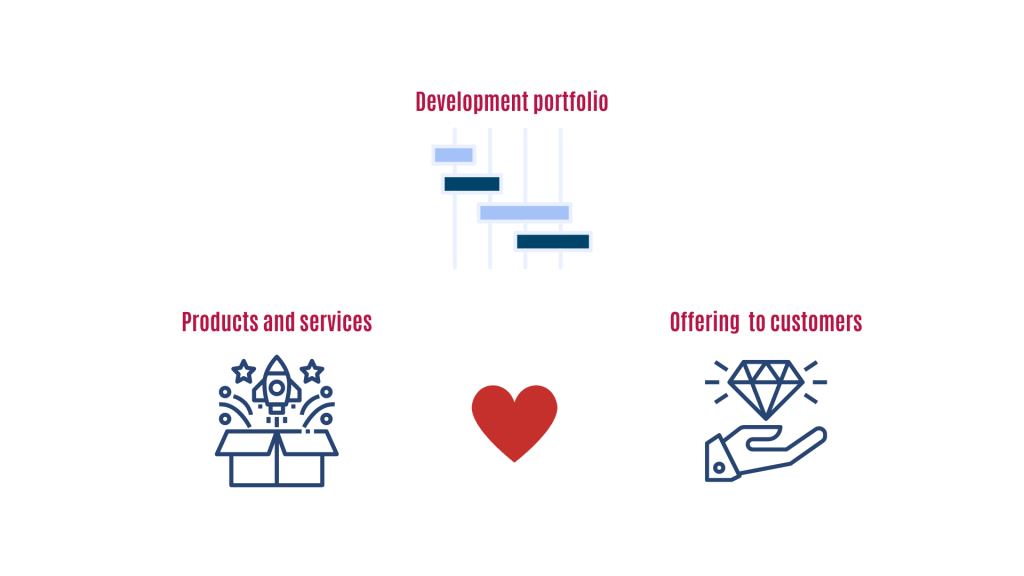
First dimension to look into is the products, services and solutions.
Different companies may have different definitions for offering, products, services and solutions. See more about product portfolio management in the previous blog post”.
So what is the difference between products, services, and offering? An offering may be combining products and services, bundled to create additional customer value and make customer life easier and more convenient. This is an area where offering development can create value – developing offering content from the existing product and service offerings to package or bundle in new appealing ways and introduce new interesting offering concepts. And naturally, creating interesting customer offering is a great opportunity to boost sales.
Product Lines and Families
Many traditional companies may have a strong foundation in product development – creating high-quality products, with rich product features. Products are typically categorized based on product lines or product families. There may be also for example technical platforms or enabling technologies to group the products. Also, development organization structure is often aligned across product families or product lines.
Offering may be product line specific or available across different product lines. This is also important aspect to consider and communicate – is the new offering available for all, or are there some limitations also from the technical view point?
Geographical differences in offering portfolio

One of the dimensions for offering portfolio is also the availability of the offering in different geographical areas and countries. There may be significant differences in the customer needs across the different areas, as well as legislation and standards. Also to enable the sales of a new offering may require deployment activities locally, for example to enable sales, supply chain an operations.
Offering themes

Let’s continue with the different dimensions. There may be a need to also present the offering based on different offering themes, such as Sustainability or Energy efficiency: what are the different offerings which are solving a specific challenge customer has across different business units and product lines? For large companies, it may not be a trivial thing to identify all the relevant offerings linking to a specific theme.
Offering bundles

Another dimension to look into is offering bundling: which offering components, products, or services are often sold together, or which offering components would create more value to be offered as a bundle? There may be also bundle pricing – getting discounts for buying more at once.
Standardized Offering vs. Customized Content
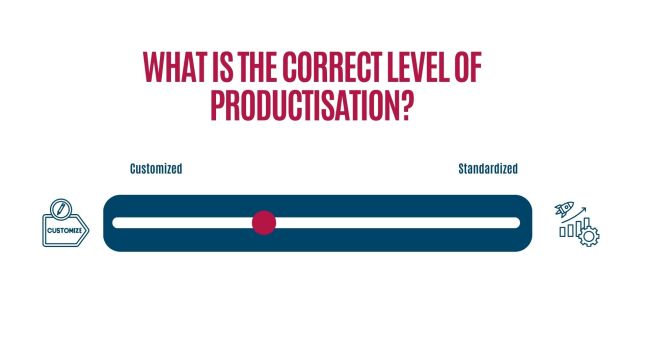
When developing an offering it is good to consider also how standardized the offering is or how customized. If selling for example business consultancy, there may be high-level offering packages, but each customer may have customized service in the end. This is quite business specific and linked closely to product strategy, but in the end, also has a major impact on how scalable the offering may be.
Offering categorization based on customer segment
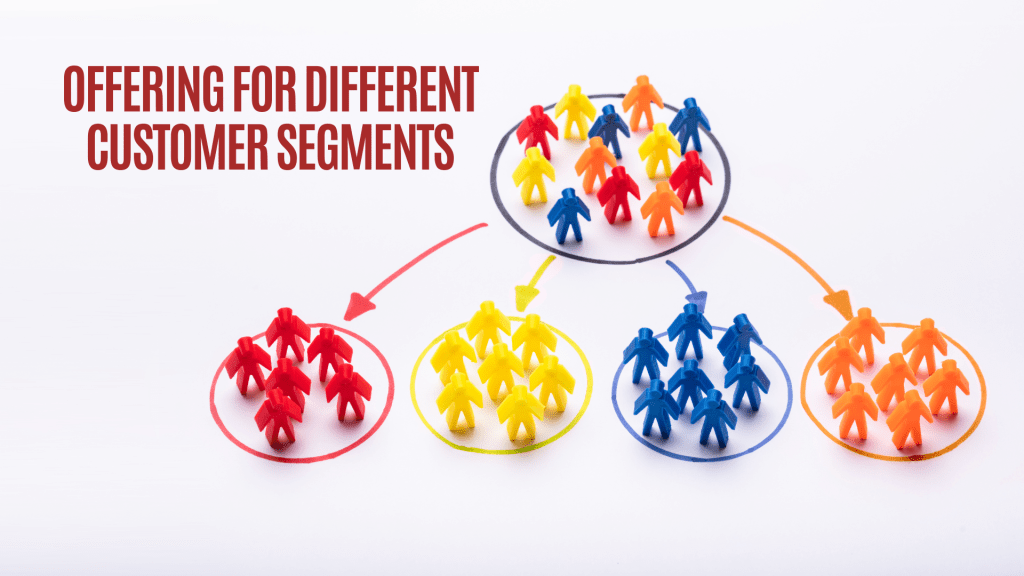
Another dimension for the offering is to whom the offering is targeted – to which customer segments or micro-segments? Is offering relevant only to one customer segment, or is it available across all segments? The needs of different customer segments may vary and the products may need to be packaged in different ways for different customer segments.
Offering based on customer profile & role

Also categorizing the offering based on different customer profiles may be an important way to target for example marketing to exactly correct customer profiles. Offering may be a bit different for example for early adapters or for customers who want to ensure smooth operations.
Customer role may also play a significant role, in terms of interest. Customers may have for example technical roles, roles focusing on profitability and growth, or roles focusing on strategic development. How to offer and what to offer to different roles may vary across different customer roles.
Other dimensions: customer journey, life cycle and profile

There are also several other important dimensions to look into, when developing offering to to serve customers better:
- Offering based on the customer journey – grouping and bundling offering to support the customer journey and moments that matter
- Offering based on the product life cycle – offering targeted at customers with products in different life cycle phases, e.g.
- Offering based on customer value created: commodity/must have, value-adding, cost saving offering…
Recommendations
All in all, there are several viewpoints to look into the offering portfolio, and the same offering may be presented for different purposes based on these different dimensions. One of my recommendations would be to choose which dimensions to use and perhaps start with only a few. If there are too many dimensions or viewpoints, presenting the offering may become a bit messy and confusing.
Also it is good to look into what do you have currently in the tools and systems – do you already use certain categorization and is your offering data up-to-date in the tools and training materials to enable smooth sales? If not quite there, working on data quality is also a great place to start.
I would love to learn more about this – which offering portfolio dimensions are relevant for your organization? Also, do you use tools to manage these different dimensions?

 Strategic Portfolio Management
One thought on “Ideas To Build Offering Portfolio – Which Offering Portfolio Dimensions Are Relevant For Your Organization?”