


One of the key portfolio management goals is to maximize the value of the development portfolio – I reviewed some methods to achieve this during my previous post (See 4 Goals of Portfolio Management). After this post, I have had great discussions about maximizing value. Again, this is a tricky topic, and I share some of my learnings while studying this a bit.
Let’s look into value creation from a strategic initiative viewpoint, taking step by step approach.
Step 1: Identify The Value

One of the great articles I would recommend for you is Deloitte’s Linking Strategy to Value Published in Journal Of Business Strategy 2012, if you are not yet familiar with the thinking. The article introduces a a clear framework to map Shareholder value, but also liking Strategic Vision, Objectives and Initiatives to value created.
The article provides also model to map strategic initiatives to business capabilities, enabling IT capabilities, applications, technology and to organization. I think this approach may be helpful for example for IT organizations struggling to connect enabling IT development to strategy.
Strategic initiatives may create different type of value for different stakeholder groups, and not everything can be easily measured with financial numbers. The traditional approach is to look into increased business profits or decreased costs – what is the financial value of the initiative? This is important – development should create tangible benefits. However, there may be also other type of value, not only ‘hard financial numbers’.
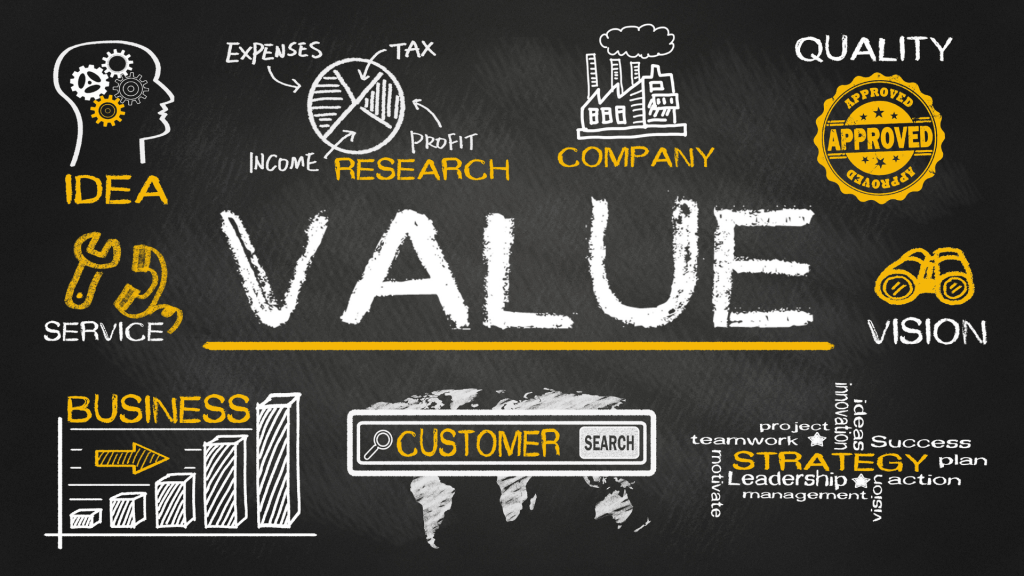
How is the value created?
It is not always easy to describe the value created from complex initiatives. Here are a few questions to ask, if you struggle with defining the value of your development initiative:
- Are you solving customer challenges? Creating financial value to customers?
- Are you exploration of new ideas and opportunities? Investing into future horizons? Learning and exploring new customer opportunities, markets or segments? Learning about the new markets and opportunities is valuable as such, even though you would not yet have a perfect business case.
- Are you moving towards long term vision & strategic goals? Building future competitiveness step by step?
- Are you providing better service towards customers? Keeping existing customers or being able to sell more towards current customer base?
- What is the value created towards different customer groups? Can you validate your value propositions with customers?
- Are you enabling other strategic initiatives?
- Increased quality of products or services? Enabling needed quality certification?
- Leaning or automating business processes? Increasing productivity with improvements?
- Reducing or mitigating risks? Enabling business continuity within x years time frame?
TIP! In my previous role, Development Management Office team had gamified the the definition of soft benefits – I think this is a really important topic to look into and also spend some time to think about.
Step 2: Prioritize development within initiative! What is your Minimum Viable Product (MVP)?

Next, once we have identified how our initiative is creating value, it is also good to look into the scope of the development, too. Within your initiative, what is creating value to the customers, end-users and other shareholders? I am a firm believer of developing first Minimum Viable Product (MVP) – a working solution, with just a bare minimum of functionalities.
Look critically also into you development initiative scope – is everything needed to create the value?
- What is the absolute minimum, to create value to customers and end-users? Think about the scope from the customer or end-user use cases or process view point.
- What you need at the beginning, what could be developed in the next releases? Do you have DLs to meet for example based on the yearly clock?
- Don’t build something someone might need some day, perhaps. Be brave with prioritization, simple is beautiful!
Step 3: Deliver Value Incrementally
One of the typical challenges with large transformation programs is the long development time, followed by sometimes even longer deployment phases, resulting in a delay in creating value and delivering benefits. A risk with large and lengthy development programs is, that business, environment, and customer needs change over time, and finally, when going live, the solution built with great effort is already somewhat outdated.
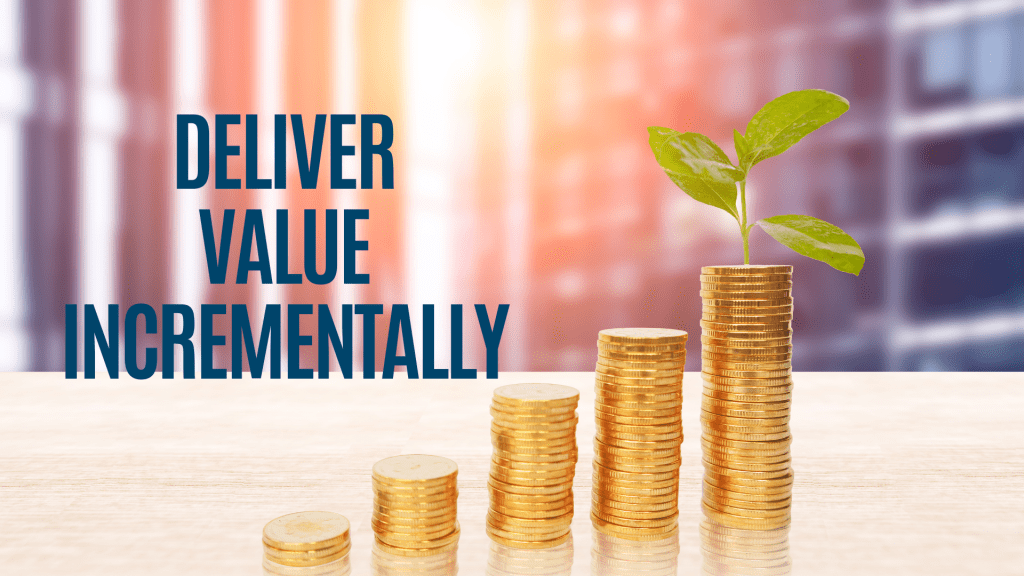
One of the great approaches is to break down large initiatives into smaller pieces, which are easier to manage and start to receive benefits incrementally. Sometimes this requires also a bit of creativity. Here are few questions to consider:
- Can you break down the large entity into meaningful smaller pieces? Can you find quick wins?
- Can you test your concept with customers with a light back-end or even with manual processes?
- Can you you start your ERP transformation/large initiative with the green field units to start to get benefits, and then move to more complex existing units?
- Can you develop a long end-to-end business process piece by piece and start to get the befits for the first parts as soon as possible?
- Can you lean the existing business process before starting the IT renewal?
- Can you prioritize the work based on the urgency of the solutions, if you have critical timelines? Are there solutions, which could be implemented later?
For large transformation programs, there is a huge difference, if we start to receive value incrementally already at the early phases of the program, when compared to big bang approaches.
Step 4: Communicate about the value!
One of the areas, I admit I would need to focus more on, is to communicate about the value. WHY is this important? What is the value towards different stakeholder groups? What is the value towards customers?
This is so important for motivation. Many different stakeholder groups need to work hard to develop and deploy the new development initiative, and they have tons of other priorities, too. When we all understand the value, we are also more willing to give our full support! Here are few topics to consider:
- Communicating the value towards development teams – we all get motivated when we understand why!
- What is the value for different stakeholder groups?
- Creating crisp marketing materials for new offerings to communicate about the value propositions
- Creating great materials to support change management when deploying new solutions
To be able to communicate the value clearly requires typically a lot of hard thinking and also several iterations with the different stakeholders. If you struggle to communicate about the value, you might need to iterate with the step 1.
Step 5: Remember to measure!
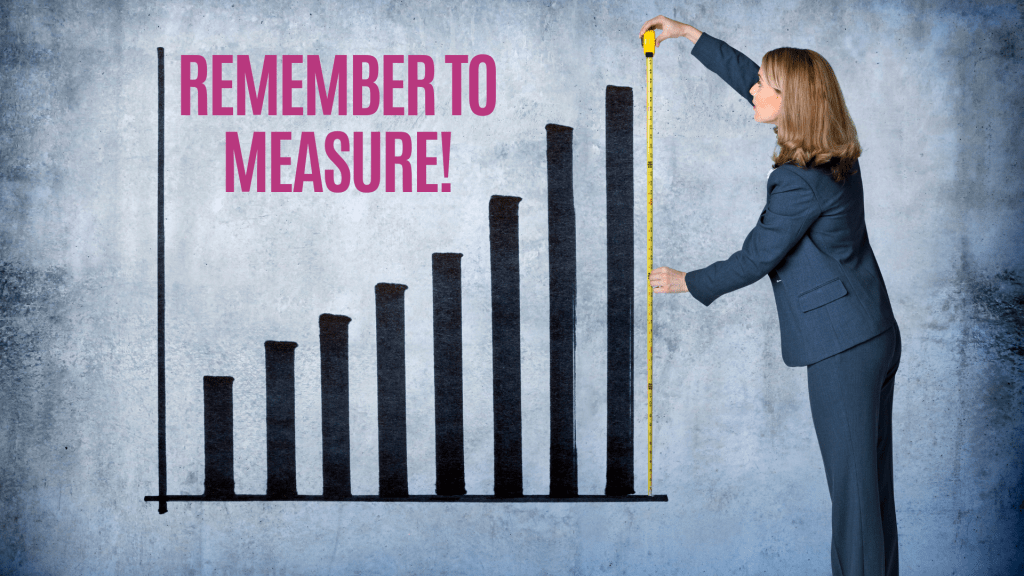
Measuring the created value is often a really difficult topic, and requires also often several iterations to find the best approaches. How can we measure the value?
- Objectives and key results (OKRs) are great tool for development initiatives, as the measurement of key results is in built into the model. You can read more about OKRs via a dedicated blog post!
- If you are introducing a new offering, can you setup a simple dashboard to see the sales ramp up? Can you measure the profitability of your first pilot cases? Can you get measurable the value towards customers?
- Key Performance Indicators (KPIs) are a common approach to measure progress. In addition to lagging indicators looking into past progress, are you able to define and follow up on leading indicators – looking to future outcomes?
- There are also tons of super good resources for product management KPIs. If you are developing new products or services, select the best ones fitting your area.
- Follow up on your business case – how is the benefit realization progressing? One of the portfolio management tasks is to follow up on benefit realization, and value created, even after the project team might have moved to new projects.
This topic would deserve an own dedicated blog!
References
Eugene G. Lukac and Don Frazier. Deloitte: Linking Strategy to Value, Published in Journal of Business Strategy, Vol. 33 Issue: 4, pp.49-57 (2012). https://www2.deloitte.com/content/dam/Deloitte/ie/Documents/Strategy/2012_linking_strategy_to_value_deloitte_ireland.pdf
 Strategic Portfolio Management