

Many organizations have well-defined project methodologies and today also agile practices; however, when it comes to large and complex strategic initiatives, one often needs to learn this part by doing. And for many, it is a rough road as up to 70% of strategic change programs fail [1]. Next blog posts will focus on good practices, how to get started with your strategic initiative, and how to avoid the most common challenges!
Why do strategic initiatives fail?
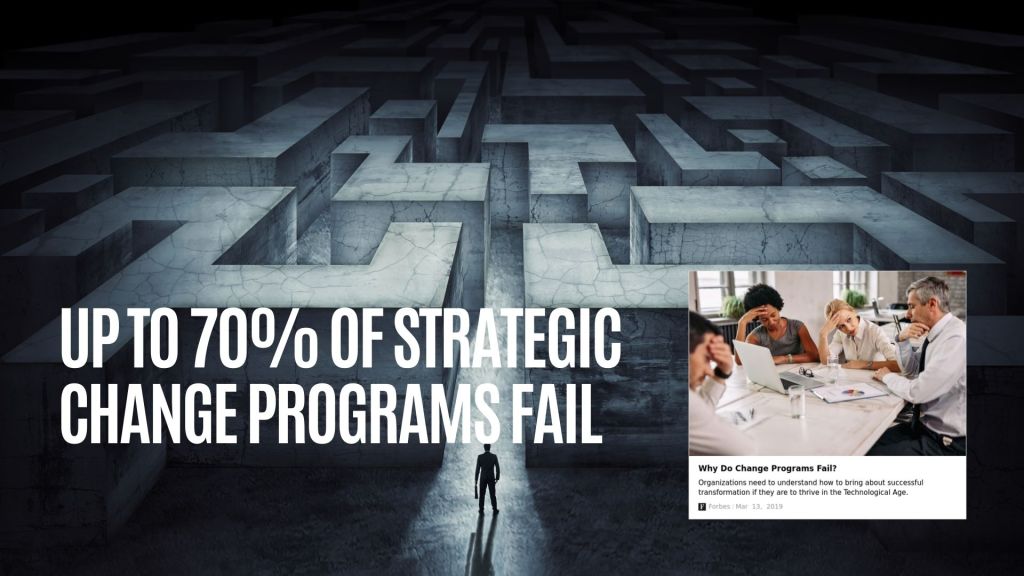
Let’s review key reasons why change programs fail, based on the study [1]. When participants in the survey were asked to create a list of reasons for failure, ‘insufficient budget’ was cited by 23% and – ‘insufficient time’ by only 17%. Instead, participants ranked poor communication (62%), insufficient leadership and support (54%), organizational politics (50%), lack of understanding of the purpose of the change (50%), lack of user buy-in (42%) and lack of collaboration (40%) as the most critical issues. Executive buy-in and sponsorship are also commonly cited as reasons for failure. Leading strategic initiatives is truly challenging, even though there are great people leading these activities, it is never easy!
What needs to happen to get started?

Getting started with a large strategic initiative can indeed feel overwhelming. Where do you begin, and what needs to be done? I understand the frustration all too well; one of my own development programs dragged on for seven long years before receiving approval. You’re not alone in this struggle!
There are established standards for project and program management, so I won’t write a guide on that. Instead, I’ll focus on the content and what usually needs do be done during the pre-study phase of a large complex initiative, whether you’re changing the operating model, transforming your processes and IT solutions or creating completely new type products and offering.
Hey, all you seasoned leaders and program managers out there! What 10 steps would you guys suggest? Here are the ones I think are the most crucial!
READY – Getting started with your strategic initiative
To get started what are the key things to focus on? I would start with the following steps:
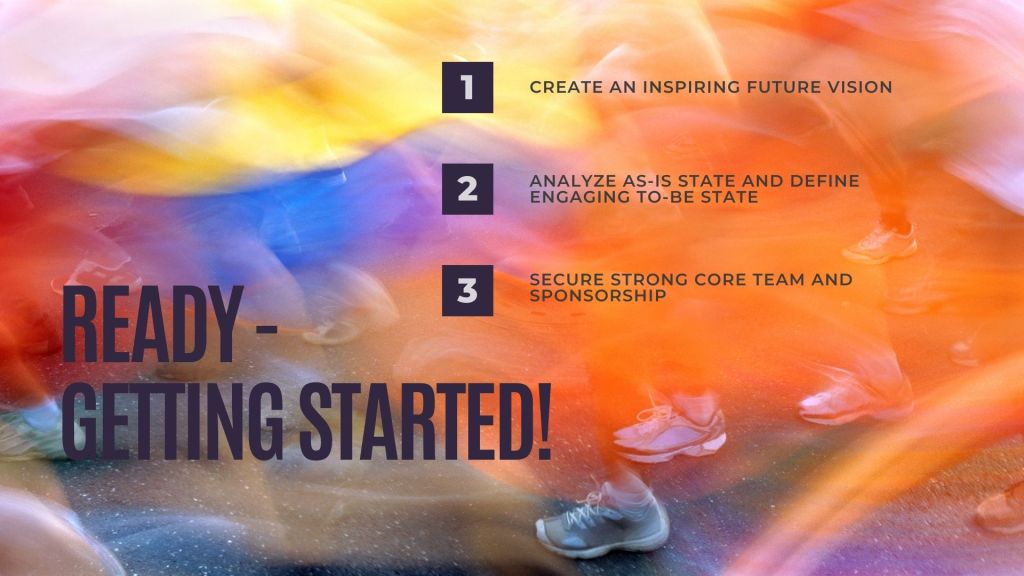
1. Create an inspiring future vision
When you are in a hurry to get started, one may miss this part easily. However, without an inspiring future vision, you may lack the clear direction, north star, where you want to be in the future. Here are few supporting questions:
- Where do you want to be in the future?
- What would good look like?
- WHY is this change needed?
How to create your future vision? Couple of methods for inspiration:
- Bright Future Ahead – Creating an Inspiring Development Vision – Kudos for Mirette Kangas – who has been teaching this methodology!
- Finding Your North Star – Creating a Shared Long Term Vision
2. Analyze As-is state and define engaging To-be state
At the beginning of the journey, it is good to understand the current state from different perspective, but also define a concrete to-be state aligned with your future vision.
- Take some time to understand your as-is situation from different perspectives – where are you now? Look into different perspectives:
- How standardized your processes are, what are the skills of different roles and capabilities of the organization?
- How are the tools and IT solutions supporting the processes? How is needed data maintained?
- What is the state of art for your current technology, products and offering? How are the sales numbers today?
- Where do you want to be concretely to reach the future vision?
- Do you need to build new organizational capabilities to support the future vision? New roles or skills needed in the organization?
- Do you need new IT tools or enhance existing tools? Do you need more systematic data management practices?
- Do you plan to develop new products or offering? Do you have needed knowledge in the organization for development, or would you need external help or new hiring? Do you need to build new technical capabilities or develop new technology?
- If you plan to develop new type of offering, who would sell, deliver and operate? Do you need to develop end-to-end processes and supporting tools?
- What is the gap between the as-is situation and your desired future vision?
- Great ways to communicate about the gap is to define From -> To-be statements or create a systematic gap analysis
- Analyzing the current state and to-be state often requires help from many stakeholders – ensure you involve correct parties to start the organizational engagement!
- For large complex development initiatives, you can get started with a well prepared workshops, but typically some iterations are needed!
- The gap analysis is also excellent tool for initiative scope definition and planning the roadmap!
3. Secure strong core team and sponsorship
This is a step, you should not miss!
A strong core team is crucial to make things happen. You can achieve little alone, so building a committed team early with resource managers is essential for success. Here are few supporting questions:
- What type of skills you need in your team? Do you need for example end-to-end business knowledge, technical experts, IT gurus, or someone from the sales?
- Check out the organizational chart, who is responsible for different areas and seek for advice from people who know the organization and people very well.
- Do you need professional project management support or agile coaching? How about the change management and communications, who could take a role?
- Start to already think also a longer term plan – would you need new hirings with new skills or could you use external experts to get a quick start? Check out also what practices your organization have for headcount planning and approvals – so that you will not have surprises later on.
Senior management sponsorship is essential for any complex transformation, and without this support, the initiative will most likely fail. You need the strong sponsorship for driving the investment approval, you need the sponsorship to secure the best possible resourcing and you need the sponsor to support you to drive the change. Here are few things to consider:
- If sponsorship is clear from the day one, engage your sponsor already to create the future vision! Discuss with your sponsor about the expectations of the role, and also sponsor’s availability during the transformation journey.
- If your initiative has cross-unit impact, do you need multiple sponsors? In large corporations, do you need sponsorship from different levels of the organization? Do you have a sponsor and an owner?
- Perhaps your initiative is something completely new, where clear ownership does not exist – look upwards in the organizational chart – who should you reach out to identify the sponsor?
- If you fail to identify the true sponsor, is this an initiative organization has enough commitment to start with?
Steady – Plan and prepare!
Even though there are critical activities when getting ready, it is important to also start to look into the concreate plans and do a solid preparation. Let’s look into high level steps required here!
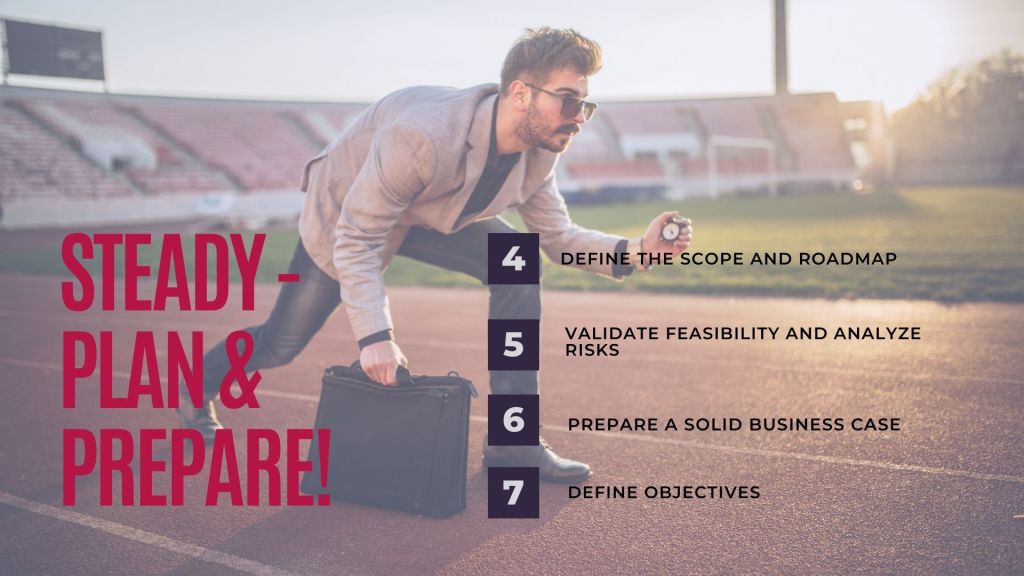
4. Define the scope and draft the roadmap
One of the challenges many complex strategic initiatives face is the creeping scope.
- Define concretely what is in the scope of your initiative, but maybe even more important is to clearly communicate what is out of the scope – to manage the expectations with the organization
- For roadmap definition, here are few tips to consider
- Are you structuring your initiative as a program including different projects, or do you for example have multiple working streams with smaller activities or is the development implemented by the agile teams and you would have epics in your roadmap? Reach out to your PMO or portfolio management team to get support for structuring the work.
- Are you able to create an outcome based roadmap? So that the reviewer of your roadmap can see what outcomes will be achieved.
- If your initiative is large and complex, do you need multiple roadmap views for different purposes? Higher level roadmap for the entire initiative duration, and more detailed one for planning purposes?
- Check also in the early phases, if you have portfolio or project management tools in use and could these tools help to visualize the initiative and create transparency across the organization.
- Roadmap and scope should be actively updated based on the learning as a team and also based on the stakeholder discussions. Also throughout the execution phase of your initiative, I would recommend to review and update roadmap at least quarterly.
5. Validate feasibility and analyze risks
At this phase, it is important to step back, and also do a quick validation of the plans and think about how to mitigate key risks. Here are again few supporting questions:
- First of all, your core team and sponsor should be committed to your draft plan – is your roadmap ambitious but still doable and realistic?
- Do you need new technology to support your initiative? What is the real readiness of the technology?
- What key assumptions you have taken while creating the roadmap? Write down the assumptions, and analyze if there are weak points.
- Do you have strong dependencies to other initiatives – what happens to your plans, if there are changes in the other initiatives?
- What are the key risks included – and how can you mitigate those? Check out your organization’s risk management practices to be compliant with those.
- Later on, when you review the plans with other stakeholders, pay attention to questions or concerns to identify still weak points. Improve your roadmap based on the feedback!
6. Prepare a solid business case
Well – this is the moment of truth – now that you have done initial planning, do you have strong solid business case? Here are few things which have been helpful for me:
- Partner with your business controlling to get the best possible support. Check out with your business controlling and portfolio management teams if there are templates or good practices to follow! Are there yearly planning cycles such as long range planning or budgeting as DLs to be take into consideration?
- What are the key sources of benefits? Are you aiming at saving costs or increasing the sales? If you are planning to increase the sales, seek for commitment from your sales colleagues – how do they see the sales potential in different regions? Are you able to start to deliver value incrementally? More tips here: Focus on Value!
- Look holistically into different types of costs elements – do you need Opex or Capex funding, do you need extra headcount during your transformation program – and what is the impact of development for the run costs? Check out also other viewpoints to business cases for an earlier blog: How is your development portfolio impacting future run costs?.
- Are there soft benefits – something you cannot measure easily in monetary terms, but are still creating value?
- Document also the assumptions behind, so that you can explain your numbers clearly. And sometimes also few scenarios may be helpful, for example with optimistic and a bit more neutral sales scenario.
- Some initiatives are also mandatory due to regulation, obsolescence management of technology or other reasons – communicate clearly these reasons, if you are not able to define a positive business case.
- Involve people with different perspectives to review the business and validate and iteratively improve the business case.
7. Define objectives
You may have a well established way for target setting and KPIs in your organization, and it is important to follow these practices.
- Seek guidance from your business controlling and sponsor – what would good look like in terms of inspiring objectives, and how you can measure the success?
- One of the powerful tools I would recommend to close the gap between the high level strategic vision and actual development is the goal oriented management – defining clear Objectives and Key Results: Closing the gap between strategy and development using Objectives and Key Results (OKRs)
GO – Get the approval!
Once you have done your preparations well, it is time for pre-cooking to get your investment approval!
8. Create a pitch deck
Create a clear pitch deck, you can use to support the decision making. Include the key information from the previous steps in the pitch deck. Here are few tips, which have been useful:
- Create a clear management summary – make it short and crisp.
- Make your pitch deck modular – you can pick and choose different slides for different meetings based on the stakeholder interest.
- If your organization has standardized template for investments, get familiar with what is required there.
- Don’t make it too long – add more detailed content in appendices.
9. Seek for alignment
In large organization, this is the part where you may either ensure success to be doomed to fail.
- Identify systematically stakeholders to align with. Ensure you have possibility to present your initiative in existing forums or organize own alignment meetings as needed.
- Book 1-1:s with key decision makers to get their inputs early enough – and based the feedback, improve your proposal. You want to avoid no-go decision due to poor pre-cooking.
- Sometimes there are different interests within large organizations – try to find win-wins – and also think about how to communicate about your initiatives to different stakeholder groups.
- In addition to your organization, do you have important partners or vendors who should be committed to your plans?
- This may take some time, and you may feel you are repeating yourself, but doing this step well will help you not only to get the investment approval, but also during the actual execution phase!
10. Prepare for investment approval
Well, this is it!
- Check schedules for the needed decision making forums and align with your sponsor on DLs!
- Create a clear decision proposal. Prepare the decision making material and ensure prereading material it is ready based on the timelines.
- Prepare the presentation well – and think about potential questions or concerns there may be. If you have done the precooking well, you have practiced your pitch deck already with other audiences.
- People love engaging stories – what is the story behind your proposal? Communicate about WHY this development is critical.
Did you get the approval?
Congratulations, well done! This will be the starting point of your actual execution – a long and interesting journey ahead!
What if you don’t get the approval?
- If there are concreate action points to clarify, this guidance will help you to improve the proposal. Work on the action points and come back with even better proposal.
- What if your initiative will be postponed? This may be very disappointing after all the hard preparation work. However, sometimes there are also other important priorities and your initiative may be more successful when implemented later with proper focus. Collect and document all the lessons learned and organize a proper retrospective with your team – and celebrate all the learnings you have done as a team!
References
[1] https://www.forbes.com/sites/sallypercy/2019/03/13/why-do-change-programs-fail/?sh=428e85e42e48
 Strategic Portfolio Management