Product Strategy Demystified: How to get it Right?

Why do so many products fail despite great ideas? Often, the missing link is a clear, actionable product strategy. A good strategy isn’t just a roadmap – it’s a set of choices that connect vision to customer value and business outcomes. But how do you get it right? I will summarize both my own practical learnings and also add plenty of inspiring additional reading links below! As always, I hope this is helpful, and I would love to hear your thoughts, too!

Building ambitious and inspiring product vision

The first mindset shift needed is moving from day‑to‑day operational or tactical thinking toward a more strategic perspective – starting with your product vision. Ask yourself: Do you already have an ambitious product vision? Has it been created together with your team and aligned with management?

Below are a few practical tools that can help you define and strengthen your vision:

Whichever method you choose, define an ambitious and inspiring product vision—one that energizes your teams and guides strategic decisions.

Objectives and Key Results – Step-by-Step Path Towards Product Vision
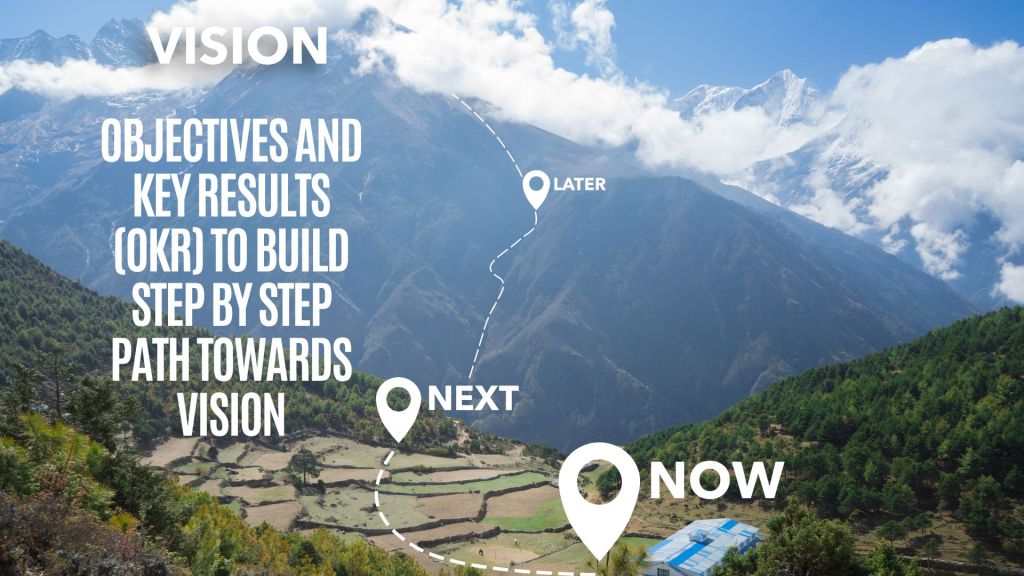
One of my favorite tools for goal-oriented management is the Objectives and Key Results (OKR). It integrates well into a product strategy approach by helping you to set clear, step-by-step objectives and measurable key results that lead you toward your future vision.

The idea with OKRs is simple: we define inspiring objectives and concrete measurable key results. Sounds easy, but defining great OKRs requires some work and typically a few iterations with the team and key stakeholders. Over time, OKRs become better and better!

For more on OKRs, here’s an earlier blog post with helpful links:
https://strategic-portfolio-management.com/category/objectives-and-key-results/

Where to Win and How to Play?

When you are developing your product strategy, DO NOT FORGET YOUR CUSTOMER!

Product strategy must be grounded in customer insights – understanding the real needs of customers.

  • Based on customer feedback, what insights do you have for the future needs of the customers?
  • Are you actively ideating with customers and validating new ideas with the customers?
  • What is your product’s key value proposition towards customers? Can you summarize shortly how your product creates value for customers?
  • Do you know your key customer segments – where do you want to focus efforts?
  • How are markets evolving? What alternatives or competition do you have in the markets?
  • How is your global supply chain looking like considering different geographical locations? Do you have different customer needs in different regions?
  • How is the regulation changing? Do you have some compliancy requirements to consider?
  • How about the strategy for the company or business unit? Do you receive new direction regarding the product focus areas from this strategy?

This is one of those topics, which for sure would deserve fully dedicated blog post…

Building an Outcome-Based Strategic Roadmap with Different Time Horizons
What is the first thought when you think about product strategies? For many of us, it may be a product roadmap illustrating where we are heading with the product and what developments are ongoing.

I have seen many wonderful product roadmaps, and here are a few options to consider:

  • Build an outcome-based roadmap – instead of showing project stages or milestones, show what the tangible concrete outcomes of development activities are.
  • Show different time horizons – build your roadmap utilizing different time horizons. For example, you could have a detailed roadmap for the next quarter or year, but less detailed business epics for the next five years.
  • Build your roadmap based on strategic themes – group development activities based on strategic themes, to link the work to company or business unit strategy implementation.
  • Utilize common roadmap templates – check with your colleagues, if they already have great templates or examples, you could utilize for your product roadmaps. If every product manager in a company builds the roadmap in a different way, think about the headache for senior management trying to see the big picture.
  • Utilize company portfolio management tools – portfolio management tools today offer possibilities to create different types of views and visualization based on the entered data. If you have a tool available, could you utilize that to create portfolio level transparency?
  • Share your roadmaps with the stakeholders – If you do not have common tools, would you have a common location where to store and share product roadmaps? If your product roadmaps cannot be openly shared across wider group of stakeholders, do you have regular meetings where you share the updated roadmaps with the management?

Building a great product roadmap typically requires several iterations – you may need to collect feedback from different development teams and numerous stakeholder groups – and based on all of the feedback received, you can improve your product roadmap. Just remember to utilize your product roadmap actively as a part of day-to-day work when you meet different stakeholder groups!

What is the lifecycle phase of your product?
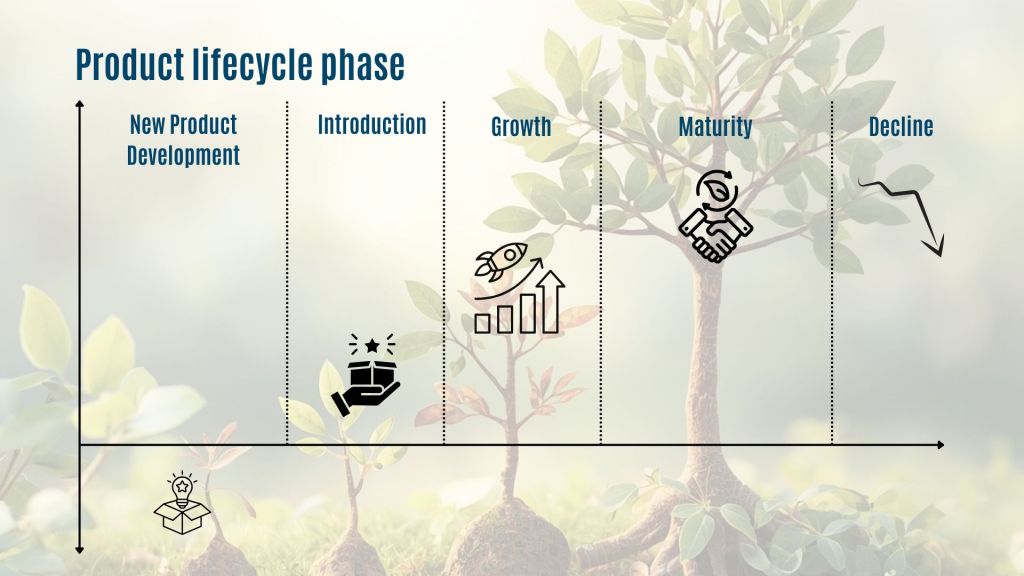
Product strategy depends a lot on the lifecycle phase of your product. I have noticed that for a wider group of stakeholders, it is not necessarily clear that everyone shares the same understanding of the stage. Sometimes, a product may still be in pilot as part of New Product Development, but there is an expectation of already reaching growing volumes. Your organization may have its own categorization for product portfolio management, but here is a generic one with phases: 1) New Product Development, 2) Introduction, 3) Growth, 4) Maturity, 5) Decline.

Here are few topics to analyse:

  • In which lifecycle phase is your product currently? You can also use volumes and sales statistics to analyze this if it is not fully clear, and have an open discussion with the team and stakeholders.
  • Are you moving towards next phase and do you need to take actions to prepare for the next phase? For example if you are moving from New product introduction to Growth phase, do you have scalable service processes in place to support growing volumes?
  • If you are looking at the product portfolio, how does the overall status of different products look like? Do you have gaps in your portfolio?
  • Are you familiar with Strategyzer’s Explore and Exploit portfolio? Good content piece to check out available here: https://www.strategyzer.com/library/business-model-evolution-using-the-portfolio-map

Share your product strategy to build alignment and feedback loop
If you create a great product strategy, but only a few people know about it – product strategy creates little value. So be brave and share your product strategy with the stakeholders – it may feel very uncomfortable especially during the first rounds, but it gets easier over time.

  • Implement feedback loops – product strategy should evolve with market shifts, technology changes, and based on customer feedback. What is the good cadence for you to look into product strategy? Quarterly? Bi-yearly? This depends a lot on what type of product you are working with.
  • Our teams have had good experiences with product strategy days with the key stakeholders and strategy communication towards larger audience.
  • Customize communications content based on the audience – Sometimes it is a good to remind myself, that not everyone is deeply involved in our product development, and you may need to have communications materials with different abstraction levels. If you have a master comms materials, pick and choose relevant content to meet the needs of your audience.

What are your pro tips? I would love to hear what has been working well for you!

For more inspiration – additional reading

There is a lot of really good content about product strategies, here are few examples I have felt were inspiring:

Aha! (2025). Product strategy: How a clear one leads to success. https://www.aha.io/roadmapping/guide/product-strategy

Amplitude. (2024). What is a product strategy? Framework, template, and examples. https://amplitude.com/blog/product-strategy-framework

Atlassian. (2025). What is a product strategy? Definition, best practices & how to build one. https://www.atlassian.com/agile/product-management/product-strategy

Design2Market. (2024). Product strategy demystified – No MBA required. https://www.design2market.co.uk/academy/product-strategy-a-step-by-step-guide/

ProductPlan. (2024). What is a product strategy? https://www.productplan.com/glossary/product-strategy/

Remote Sparks. (2025). 10 essential product strategy frameworks for 2025. https://www.remotesparks.com/product-strategy-frameworks/

Scrum.org. (2025). What is product strategy? How to think and act strategically as a product leader. https://www.scrum.org/resources/blog/what-product-strategy-how-think-and-act-strategically-product-leader

Walker, S. M. (2024). Product strategy guide — Templates/Frameworks (2023 Edition). https://productstrategy.co/the-ultimate-guide-to-product-strategy/
Developing new products and services – are there differences?

How does the development of physical products differ from development of services – or does it differ? In the context of New Product Development (NPD), portfolio management has been studied a lot during the past decades in order to optimize the product portfolio. However, I was interested in learning more about New Service Development (NSD), and noticed, that this area has been studied less.

I found an amazing article by Aas, Breunig and Hydle: Exploring new service portfolio management (International Journal of Innovation Management,2017) and wanted to reflect on the key insights via the blog! Based on the literature summarized by Aas et al., there are indeed some clear differences:

  • New Service Development processes are often more incremental, informal and ad-hoc than New Product Development processes
  • A higher number of stakeholders are involved from different units and functions during the new service development, than in NPD processes
  • The effects of NSD on business performance have more intangible, strategic, long term and qualitative nature than the effects of NPD

Let’s have a look in more detail, what were the key lessons learned from the case study:

Many sources of ideas for new service concepts

Typically for new services, ideas come from a big number of different sources, such as customers, own employees from different units and functions, suppliers, competitors, and sometimes also from government. The ideas may be of different sizes, and of different nature ranging from development of new digital services to improvement of operational service process steps or compliancy to regulation or improvement of existing service offering. In the portfolio level, prioritizing such a wide range of different types of ideas from different sources is not always easy – how to compare ideas with can range from operational improvement to completely new service concepts?

Lessons learned 1: The recommendation from the article by Aas et al. (2017) was to exploit different sources of ideas and base New Service Development portfolio decisions on both strategic alignment and value criteria. This helps to create a balanced portfolio, and not to focus too much on just one type of ideas, e.g. ideas improving internal efficiency.

New Service Development is often hidden and based on small changes – creating transparency via NSD portfolio

New product development (NPD) has been traditionally executed via stage-gate projects ensuring all the needed steps to develop high quality products. Based on the study by Nijssen et el. (2006) New Service Development (NSD) is often ad-hoc and hidden – not clearly visible in the development portfolios. Continuous improvement is extremely valuable – however when developing a completely new type of service concepts or radical innovations, development work requires typically a lot of work across the organization and extensive resourcing.

Lesson learned: Accelerating new service development by transforming ideas into formal New Service Development projects, in the early phases of the development. Based on my own experience, a projectized approach often helps to create awareness in the organization, supports with the resourcing and systematic decision making. If development is happening via agile teams without projects, for a new service development, I have learned, that it is a good practice to have certain check points, to ensure end-to-end quality and readiness before Launch decisions. Creating overall transparency on ongoing NSD initiatives and their progress is also important in large organizations.

Flexibility in development process and decision making needed

In the study, one finding was, that NSD projects were often incremental by nature, and smaller than typical new product development projects. Larger NSD projects required also typically several decision gates, before Launch readiness, and project model was close to Cooper’s ‘state-gate-lite’. Also the NSD projects had a high level of heterogeneity, as the development ideas varied a lot, and one process did not fit all the different cases.

When developing new services, there may be changes in parallel in service concepts, technology, organization and processes. For example, when working with new digital services development projects, there has been a need to introduce new roles and processes to support the service management of the new services.

Lesson learned: The NSD portfolio process requires flexibility to successfully support the high heterogeneity in the new service development projects – one way does not fit all types of projects.

Involving many stakeholders

When developing new service concepts, support and participation from many different units and departments are needed. New service development often impacts long end-to-end value and process chains, and the alignment between different teams is important to create a successful concept. Based on the study, also in the decision making, representatives from different functions and units were involved in the NSD portfolio steerings.

Lesson learned from the study: NSD portfolio decisions need to be taken in collaboration by a group of managers representing different functional areas. I would also add, that involving stakeholders from different units during the project, creating alignment and awareness across different teams is super important, not only in the managerial level.

Developing a combination of products and services?

I have also worked with combination of products and services, for example solutions where a physical hardware is supporting a digital service. In these product-service-software solutions, complexity of both worlds are combined: there needs to be systematical way of working to support developing a high quality product, but the development process should also support iterative learning required in service development processes! These interesting product-software-service solutions would deserve an own blog!

References

Aas, Breunig, and Hydle: Exploring New Service Portfolio Management. International Journal of Innovation Management, 2017.

Nijssen, EJ, B Hillebrand, P Vermeulen and RGM Kemp (2006). Exploring product and service innovation similarities and differences. Research in Marketing, 23, 241–251.

Fuglsang, L and F Sørensen (2011). The balance between bricolage and innovation: Management dilemmas in sustainable public innovation. The Service Industries Journal, 31(4), 581–595.

Finding Your North Star – Creating a Shared Long Term Vision

In the context of agile product management, the term “North Star” refers to a guiding principle or overarching goal that helps align the team’s efforts and provides a clear direction for product development. It is often used to define the ultimate vision or desired outcome of the product.

The concept of the North Star is derived from the metaphor of using the North Star as a navigational reference point. The North Star represents the long-term vision that the team strives to achieve. It serves as a constant reference point that guides decision-making and prioritization throughout the development process.

The North Star is typically a high-level objective that encapsulates the value proposition and core purpose of the product. It should be ambitious, and inspiring – allowing the team to track progress toward the desired outcome. While the North Star provides a clear direction, it also allows flexibility in how the team achieves the goal, as agile methodologies emphasize adaptability and iterative development.

Having a North Star helps the team stay focused, aligned, and motivated, especially in complex and fast-paced environments. It provides a common understanding of the product’s purpose and allows for better decision-making by aligning all stakeholders around a shared vision. Additionally, it serves as a reference point for evaluating the impact of product decisions and prioritizing work to ensure that efforts are aligned with the ultimate goal.

Even though the North Star concept has originated from product management, the same concept and thinking work well for strategic development portfolios and strategic initiatives – the long-term vision and guiding principle providing direction, alignment, and motivation for the team and stakeholders is super important!

Let’s have a look at the steps to identify your North Star!

Steps to Identify Your North Star

1. Understand the purpose

Begin by gaining a deep understanding of your product / development scope, its intended users, and the problem it solves. Clarify the purpose and value proposition. What is the core benefit it provides to users? How does it address their needs or pain points?

This understanding forms the foundation for defining the North Star!

2. Identify long-term goals

Think about the long-term goals or outcomes you want to achieve with your product. These goals should be ambitious, meaningful, and aligned with your product’s purpose. Consider the impact you want your product to have on users, the market, or the industry. Examples of long-term goals could include increasing user engagement, driving revenue growth, or becoming a market leader.

3. How to measure?

To ensure that the North Star is meaningful and trackable, it’s important to make it measurable. Define key metrics or indicators that can be used to gauge progress towards the North Star. For instance, if your goal is to increase user engagement, you could measure metrics like user retention, time spent in the product, or the number of active users.

Tip! Objectives and Key Results could be a great way to include also measurable key results with your North Star.

4. Align with stakeholders

Engage with relevant stakeholders, such as your product team, executives, customers, and any other key individuals or groups. Share your proposed North Star and seek their input and feedback. Ensure that the North Star resonates with their expectations, aligns with the overall business objectives, and reflects the needs and desires of your target users.

5. Iterate and refine

Defining the North Star is an iterative process. Gather feedback from stakeholders, evaluate its relevance and feasibility, and refine your definition accordingly. Iterate on the North Star until you reach a clear, compelling, and measurable goal that aligns with your product’s purpose and stakeholders’ expectations.

6. Communicate and share the North Star

Once you have defined the North Star, it’s crucial to communicate it effectively to your team and stakeholders. Ensure that everyone understands and embraces the North Star’s importance and how it guides decision-making. Regularly reinforce its relevance and progress to maintain alignment and motivation throughout the product development journey.

Remember, the North Star should be an aspirational goal that provides guidance and focus but allows for adaptability and iteration. It should inspire and motivate the team, align stakeholders, and ultimately drive the product’s success.

North Star – examples from leading companies for inspiration

The North Star may vary in wording and specificity across different sources and may evolve over time as companies adapt to new challenges and opportunities. Here are some examples of North Stars from leading companies:

  • Google: “Organize the world’s information and make it universally accessible and useful.”
  • Tesla: “Accelerate the world’s transition to sustainable energy.”
  • Airbnb: “Create a world where anyone can belong anywhere.”
  • Spotify: “Unlock the potential of human creativity.”
  • Amazon: “To be Earth’s most customer-centric company, where customers can find and discover anything they might want to buy online.”
  • Netflix: “Delight our customers with great content anytime, anywhere.”
  • Apple: “Design innovative products that enrich people’s lives.”

Conclusion

Defining an inspiring North star is not easy, and it may require also many discussions and alignment. Having a clear guiding principle and long term vision, the North Star, creates clarity for prioritization and ensures, we navigate to the correct direction, even though daily work may keep us busy with the details.

Finding Your North Star – Creating a Shared Long Term Vision

In the context of agile product management, the term “North Star” refers to a guiding principle or overarching goal that helps align the team’s efforts and provides a clear direction for product development. It is often used to define the ultimate vision or desired outcome of the product.

The concept of the North Star is derived from the metaphor of using the North Star as a navigational reference point. The North Star represents the long-term vision that the team strives to achieve. It serves as a constant reference point that guides decision-making and prioritization throughout the development process.

The North Star is typically a high-level objective that encapsulates the value proposition and core purpose of the product. It should be ambitious, and inspiring – allowing the team to track progress toward the desired outcome. While the North Star provides a clear direction, it also allows flexibility in how the team achieves the goal, as agile methodologies emphasize adaptability and iterative development.

Having a North Star helps the team stay focused, aligned, and motivated, especially in complex and fast-paced environments. It provides a common understanding of the product’s purpose and allows for better decision-making by aligning all stakeholders around a shared vision. Additionally, it serves as a reference point for evaluating the impact of product decisions and prioritizing work to ensure that efforts are aligned with the ultimate goal.

Even though the North Star concept has originated from product management, the same concept and thinking work well for strategic development portfolios and strategic initiatives – the long-term vision and guiding principle providing direction, alignment, and motivation for the team and stakeholders is super important!

Let’s have a look at the steps to identify your North Star!

Steps to Identify Your North Star

1. Understand the purpose

Begin by gaining a deep understanding of your product / development scope, its intended users, and the problem it solves. Clarify the purpose and value proposition. What is the core benefit it provides to users? How does it address their needs or pain points?

This understanding forms the foundation for defining the North Star!

2. Identify long-term goals

Think about the long-term goals or outcomes you want to achieve with your product. These goals should be ambitious, meaningful, and aligned with your product’s purpose. Consider the impact you want your product to have on users, the market, or the industry. Examples of long-term goals could include increasing user engagement, driving revenue growth, or becoming a market leader.

3. How to measure?

To ensure that the North Star is meaningful and trackable, it’s important to make it measurable. Define key metrics or indicators that can be used to gauge progress towards the North Star. For instance, if your goal is to increase user engagement, you could measure metrics like user retention, time spent in the product, or the number of active users.

Tip! Objectives and Key Results could be a great way to include also measurable key results with your North Star.

4. Align with stakeholders

Engage with relevant stakeholders, such as your product team, executives, customers, and any other key individuals or groups. Share your proposed North Star and seek their input and feedback. Ensure that the North Star resonates with their expectations, aligns with the overall business objectives, and reflects the needs and desires of your target users.

5. Iterate and refine

Defining the North Star is an iterative process. Gather feedback from stakeholders, evaluate its relevance and feasibility, and refine your definition accordingly. Iterate on the North Star until you reach a clear, compelling, and measurable goal that aligns with your product’s purpose and stakeholders’ expectations.

6. Communicate and share the North Star

Once you have defined the North Star, it’s crucial to communicate it effectively to your team and stakeholders. Ensure that everyone understands and embraces the North Star’s importance and how it guides decision-making. Regularly reinforce its relevance and progress to maintain alignment and motivation throughout the product development journey.

Remember, the North Star should be an aspirational goal that provides guidance and focus but allows for adaptability and iteration. It should inspire and motivate the team, align stakeholders, and ultimately drive the product’s success.

North Star – examples from leading companies for inspiration

The North Star may vary in wording and specificity across different sources and may evolve over time as companies adapt to new challenges and opportunities. Here are some examples of North Stars from leading companies:

  • Google: “Organize the world’s information and make it universally accessible and useful.”
  • Tesla: “Accelerate the world’s transition to sustainable energy.”
  • Airbnb: “Create a world where anyone can belong anywhere.”
  • Spotify: “Unlock the potential of human creativity.”
  • Amazon: “To be Earth’s most customer-centric company, where customers can find and discover anything they might want to buy online.”
  • Netflix: “Delight our customers with great content anytime, anywhere.”
  • Apple: “Design innovative products that enrich people’s lives.”

Conclusion

Defining an inspiring North star is not easy, and it may require also many discussions and alignment. Having a clear guiding principle and long term vision, the North Star, creates clarity for prioritization and ensures, we navigate to the correct direction, even though daily work may keep us busy with the details.

Ideas To Build Offering Portfolio – Which Offering Portfolio Dimensions Are Relevant For Your Organization?

There are many ways to look into offering portfolios, and I tried to summarize different viewpoints and dimensions, which may be helpful for communication. The challenge may be, that there are many different needs to group or categorize the same offering. Also, the viewpoints when looking into Strategic Development Portfolio developing new offering and available offering portfolios are quite different!

I started to look into my notes from my MBA studies and found many different dimensions which may be relevant. Let’s look into different dimensions – and I would love to hear also how you see this in your context!

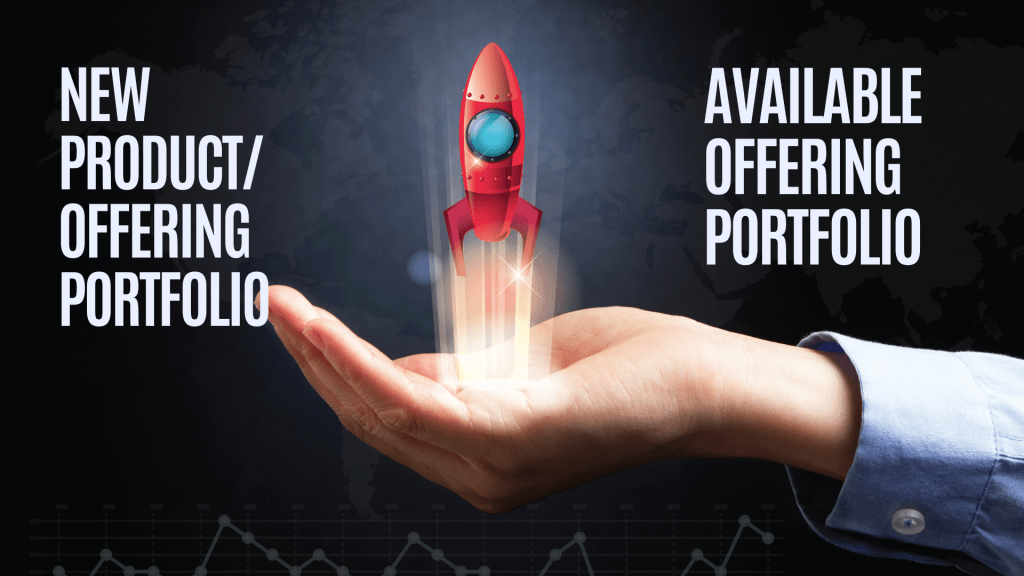
New Offering Portfolio vs. Available Offering Portfolio

Different view points to offering portfolio – new offering development portfolio vs. available offering portfolio

When developing new offering, the traditional approach has been to projectize work and develop new products and offering via a stage-gate project model (e.g. Discovery to launch process). In large organizations, hundreds of projects or activities may be ongoing to develop new products and offering. Project gates are important steps for gate-driven portfolios – each gate will include a go/kill decision point – and offering development initiatives, which are not technically or commercially viable should be killed. Project development often ends at the Launch of the new offering to the markets.

Today, as agile development via product development teams has become more common, epics or activities may be used as vehicles to develop new offering, without stage-gate project model. Development portfolio is feeding into the available offering portfolio – introducing completely new offering, or extending the existing offering with new features, use cases, or packages for example.

The viewpoint with the available offering portfolio is a bit different – the idea is to look into all the available offering in the markets and optimize the portfolio by bundling offering to meet customer needs and boost the sales of the existing offering.

Also, the offering life cycle viewpoint is important – some of the offerings may be in the scale-up phase, whereas some of the offerings may require boosting or relaunching and others may be in the retirement/replacement phase.

But let’s now look into different dimensions, which are coming up when discussing with the different stakeholder groups!

Products, Services, Solutions and – Offering

First dimension to look into is the products, services and solutions.

Different companies may have different definitions for offering, products, services and solutions. See more about product portfolio management in the previous blog post”.

So what is the difference between products, services, and offering? An offering may be combining products and services, bundled to create additional customer value and make customer life easier and more convenient. This is an area where offering development can create value – developing offering content from the existing product and service offerings to package or bundle in new appealing ways and introduce new interesting offering concepts. And naturally, creating interesting customer offering is a great opportunity to boost sales.

Product Lines and Families

Many traditional companies may have a strong foundation in product development – creating high-quality products, with rich product features. Products are typically categorized based on product lines or product families. There may be also for example technical platforms or enabling technologies to group the products. Also, development organization structure is often aligned across product families or product lines.

Offering may be product line specific or available across different product lines. This is also important aspect to consider and communicate – is the new offering available for all, or are there some limitations also from the technical view point?

Geographical differences in offering portfolio

One of the dimensions for offering portfolio is also the availability of the offering in different geographical areas and countries. There may be significant differences in the customer needs across the different areas, as well as legislation and standards. Also to enable the sales of a new offering may require deployment activities locally, for example to enable sales, supply chain an operations.

Offering themes

Let’s continue with the different dimensions. There may be a need to also present the offering based on different offering themes, such as Sustainability or Energy efficiency: what are the different offerings which are solving a specific challenge customer has across different business units and product lines? For large companies, it may not be a trivial thing to identify all the relevant offerings linking to a specific theme.

Offering bundles

Another dimension to look into is offering bundling: which offering components, products, or services are often sold together, or which offering components would create more value to be offered as a bundle? There may be also bundle pricing – getting discounts for buying more at once.

Standardized Offering vs. Customized Content

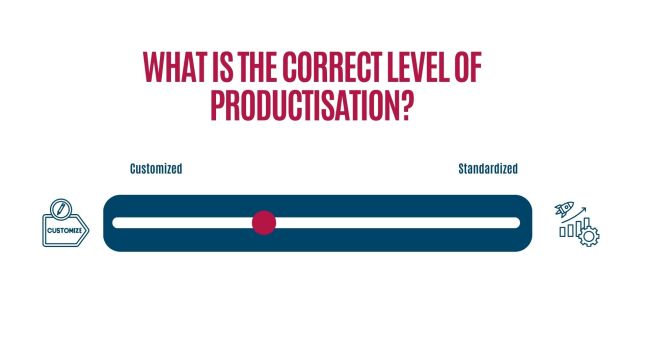
When developing an offering it is good to consider also how standardized the offering is or how customized. If selling for example business consultancy, there may be high-level offering packages, but each customer may have customized service in the end. This is quite business specific and linked closely to product strategy, but in the end, also has a major impact on how scalable the offering may be.

Offering categorization based on customer segment

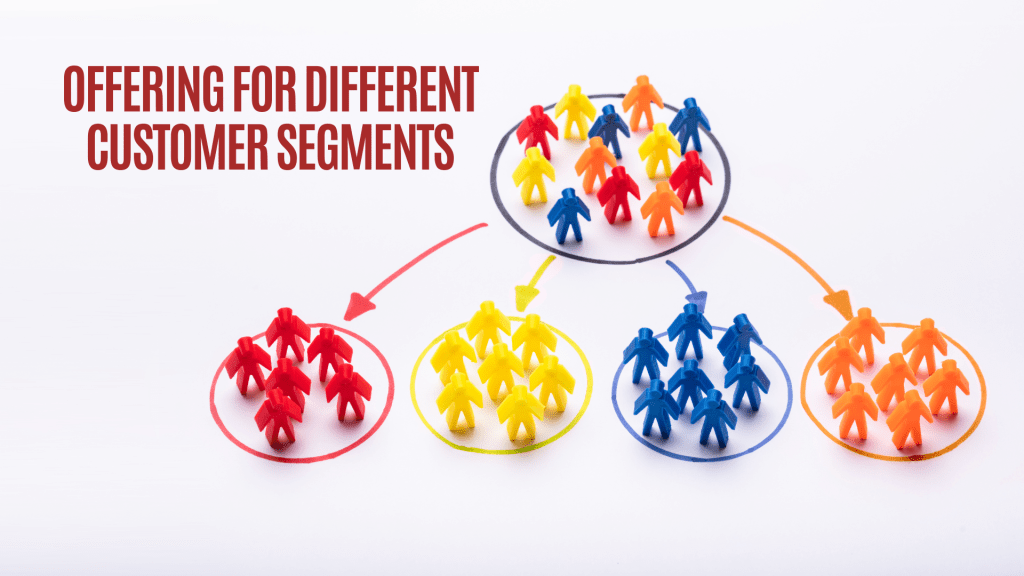
Another dimension for the offering is to whom the offering is targeted – to which customer segments or micro-segments? Is offering relevant only to one customer segment, or is it available across all segments? The needs of different customer segments may vary and the products may need to be packaged in different ways for different customer segments.

Offering based on customer profile & role

Also categorizing the offering based on different customer profiles may be an important way to target for example marketing to exactly correct customer profiles. Offering may be a bit different for example for early adapters or for customers who want to ensure smooth operations.

Customer role may also play a significant role, in terms of interest. Customers may have for example technical roles, roles focusing on profitability and growth, or roles focusing on strategic development. How to offer and what to offer to different roles may vary across different customer roles.

Other dimensions: customer journey, life cycle and profile

There are also several other important dimensions to look into, when developing offering to to serve customers better:

  • Offering based on the customer journey – grouping and bundling offering to support the customer journey and moments that matter
  • Offering based on the product life cycle – offering targeted at customers with products in different life cycle phases, e.g.
  • Offering based on customer value created: commodity/must have, value-adding, cost saving offering…

Recommendations

All in all, there are several viewpoints to look into the offering portfolio, and the same offering may be presented for different purposes based on these different dimensions. One of my recommendations would be to choose which dimensions to use and perhaps start with only a few. If there are too many dimensions or viewpoints, presenting the offering may become a bit messy and confusing.

Also it is good to look into what do you have currently in the tools and systems – do you already use certain categorization and is your offering data up-to-date in the tools and training materials to enable smooth sales? If not quite there, working on data quality is also a great place to start.

I would love to learn more about this – which offering portfolio dimensions are relevant for your organization? Also, do you use tools to manage these different dimensions?

Do you want to get the latest blog updates to email?

Processing…
Success! You're on the list.

4 Goals of Portfolio Management

Portfolio management is challenging by nature, as it is dealing with future events and opportunities – information in project selection is often uncertain and sometimes even unreliable. The decision environment is typically also dynamic – the status and prospects of projects are changing and also market environment. And resources are always limited – resource transfers between projects are not always seamless. In this blog, I wanted to share 4 goals of portfolio management from a classic article Cooper, Robert G., Scott J. Edgett, and Elko J. Kleinschmidt. “Portfolio management: fundamental to new product success”.

Even though article is quite old, and focusing on product portfolio management, I think these goals are still quite relevant. I will highlight some of the key learnings from the article and also add on some reflections. I hope this is useful, and I would also recommend to check out the original article with a lot more insights!

Let’s go through the four goals!

Goal 1: Value maximization

The number one goal of portfolio management is to maximize the value of the portfolio. How to actually do this?

Simple approach used by many companies is to calculate Net Present Value (NPV). For each project in the portfolio, Net Present Value is calculated and projects, with the highest value are selected into the portfolio scope. NPV works well in theory, but in real life, defining the business benefits is always tricky – and not always fully objective. Oftentimes also in the portfolio level, different projects are not easy to compare against each other.

Another method defined in the article is Expected Commercial Value (ECV) – this method takes into consideration probability of technical success as well as commercial success. This is really important, as even the best product or service will not have high commercial value, if commercial model is not successful, and other way around – if product or service is not working well, commercial model cannot fix the issues. Another method, called Productivity Index (PI), tries to maximize the value of the portfolio for the given resource constraints. Calculation within these methods seems to be a bit complex for practical implement, but conceptually really good food for thought!

There are also other scoring models as portfolio tools, where projects are scored on each criteria, such as strategic alignment, market attractiveness, or reward vs. risk. If you are interested to learn more, have a look at the article!

Goal 2: Balance

The second goal is to develop a balanced portfolio. There may be different attributes to achieve balanced portfolios, e.g. balance across different time horizons (See previous blog post: Is Your Development Portfolio Balanced Across Different Time Horizons?), balancing the risk level of portfolio, or balancing across different markets, technologies, product categories or project categories.

A typical scoring model for project selection summarized in the article includes the following factors with scaling from 1-10, anchored scale points 1,4, 7 & 10:

  • Reward
  • Business Strategy Fit
  • Strategic Leverage
  • Probability of Commercial Success
  • Probability of Technical Success

The article has also nice examples with traditional bubble diagrams, if you are interested to learn more.

In real life, as resources are always limited, portfolios tend to be easily unbalanced. There may be too much investment into certain business unit or product family and lack of investment into some others. There may be too much investment into products and services needed in one geographical area or market and not enough focus on other high potential markets. There may be too much focus on certain process areas and IT tools, and lack of focus on some other equally important. If the lack of balance is due to strategic priorities, that is fine – but if portfolio is not balanced unintentionally, this might cause issues in a long run.

A good practice is to review the portfolio periodically, e.g. quarterly (See previous blog post: Time for Quarterly Portfolio Review?) and check if any balancing actions would be needed.

Goal 3: Strategic direction

The article states that Strategy becomes real when you start spending money! This is true, development portfolios are key vehicles to take strategy into action. Here are two ways to ensure the portfolio is aligned with the strategic direction:

  • Strategic fit – are all projects consistent with your business’s strategy?
  • Spending break down – does the breakdown of your spending reflect your strategic priorities?

As tools to manage these aspects, two approaches are defined:

  1. Bottom-Up approach – Strategic criteria is built into project selection tools, such as scoring factors introduced earlier
  2. Top Down Strategic approach – Strategic Buckets Model – based on the business strategy, buckets of money are enveloped for different types of projects. Examples of strategic buckets defined in the article were buckets per different product line, own buckets for new product projects, platform projects or other (e.g. extensions, improvements or cost reductions).

Typically, when discussing with practitioners, having a clear strategic direction may be one of the challenges: company strategy is so wide, that is not really giving guidance for portfolio prioritization – all of our projects are linked to strategy one way or another. Some organizations have solved also this issue by creating a more detailed portfolio vision (See blog post: Bright Future Ahead – Creating an Inspiring Development Portfolio Vision) or even more concrete Objectives and Key results (See blog post: Closing the gap between strategy and development portfolios using Objectives and Key Results (OKRs))

Goal 4: Right number of projects

Most companies have too many projects in the pipeline and due to limited resources, resulting in pipeline gridlock. This is also one of the key challenges almost every portfolio management practitioner highlights during the discussions.

To solve this challenge, there are two questions:

  1. Do you have enough of the right resources to handle projects currently in the pipeline?
  2. Do you have enough resources to achieve your new product goals?

As a solution for both questions capacity planning is based on the current project’s roadmap and future development needs. Mapping resource demand and available capacity is a significant effort with large portfolios and big organizations – portfolio management tools may support these views!

In addition to capacity management, I would also strongly link this goal to prioritization! It is really important to create limit the number of new projects initiated and also kill unsuccessful projects.

Tip! Check out also the blog post: Do you manage a Portfolio Funnel, or Tunnel?

References

Cooper, Robert G., Scott J. Edgett, and Elko J. Kleinschmidt. “Portfolio management: fundamental to new product success.” The PDMA ToolBook 1 for New Product Development 9 (2002): 331-364. Link

Previous blog posts, which might be also interesting:

Blog post related to product and offering portfolio management
Blog post related to Quarterly Portfolio Reviews

Do you want to get the latest blog updates to email?

Processing…
Success! You're on the list.

Is Your Development Portfolio Balanced Across Different Time Horizons?

Development is the way to transform company from the current state to the future to-be state. One of the challenges in many portfolios is to focus too much on initiatives developing short term solutions: current products and offerings, existing processes and ways of working. Continuous improvement is super important, but if there is lack of development initiatives building future competitiveness, it is a good time to look if portfolio would need rebalancing.

I will review here some models for mapping your portfolio content based on the different horizons:

McKinsey Three Horizons model

McKinseys Three Horizons model introduced in The Alchemy of Growth (Bahai & Coley, 2000) divides investments into three horizons:

  • Horizon 1 – focus on growing and defending a company’s core businesses to ensure near-term success. Investments are typically well known and there is a low uncertainty. This is a kind of comfort zone for many portfolios – examples of investments could be enhancing existing products and offerings and improving current operating model, and IT systems.
  • Horizon 2 – investments are focusing on scaling new revenue streams, perhaps a bit outside of core offerings with higher investments and longer investment horizons than in horizon 1. New capabilities needs to be built to support horizon 2 investments.
  • Horizon 3 – investments in horizon 3 have high level of uncertainty, high level risk, and often high level of research and development required. These development initiatives could lead to creation of completely new markets for company – and potentially there could be a very high profits available in the future.

Investments into horizon one feel safe – this the comfort zone for many of us – we know this staff well and there is not so much risk. However, if all investment money is spent in Horizon 1, your portfolio may be already late with your Horizon 2 or Horizon 3 investments – too much investment into short term may damage future competitiveness. Some companies have a practice to create own portfolios for Horizon 2 or Horizon 3 investments – to give an own investment bucket for forward looking initiatives.

SAFe Investment Horizon Model – Guiding Investments by Horizons

Scaled Agile Framework has also adapted three horizons model with some enhancements. In addition to horizons 1-3, also Horizon 0 for retiring products and solutions was added – this is good, as it is important to also decommission old solutions. Horizon 1 is also split into two categories: Investing and Extracting solutions. Horizon 2 solutions are emerging next generation horizon 1 products, where as horizon 3 is focusing on new opportunities with longer return of investment time.

Categorizing investments into different horizons is a great tool – as a one time effort or even by adding horizon into your portfolio data.

Scaled Agile Framework (SAFe) – Guiding investments by Horizon

Exploit and Explore Portfolio by Strategyzer

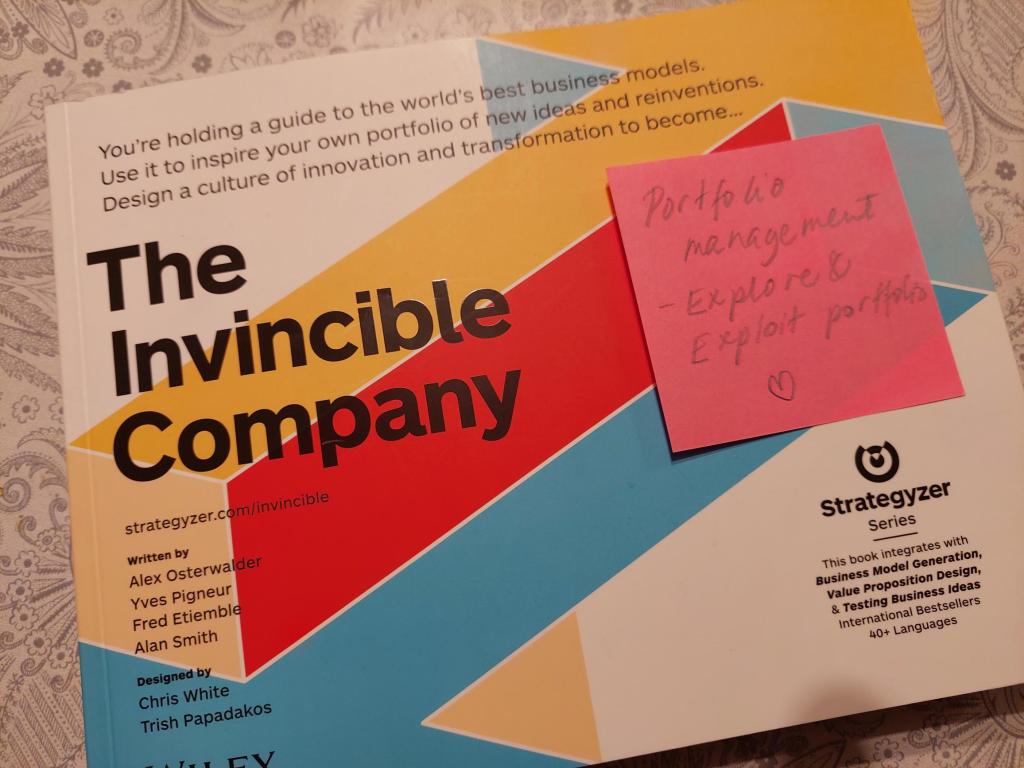
The idea within Exploit and Explore Portfolios by Strategyzer’s The Invincible Company is to divide portfolio into products, offerings or solutions belonging to either Explore or Exploit portfolios.

Within Explore portfolio, there are new initiatives, perhaps belonging to Horizons 2 and 3. Items are mapped based on the Expected return and Innovation risk – a visual tool to map the different products and services.

Within Exploit portfolio, there are existing products and solutions – perhaps Horizons 1 and 0 might belong here. Items are mapped here based on Return and Death & Disruption risk.

For product portfolios, also product life cycle stages are commonly used tool to balance product portfolio across Development, Growth, Maturity and Decline stages.

Key takeaways – is your portfolio balanced across time horizons?

A good practice for any development portfolio is to check when doing long range planning or yearly budgeting work, how much money you are spending on each time horizon. This is a good agenda item to be also discussed during the quarterly review (See my previous post – Time for a quarterly portfolio review?) If you do not have this information gathered in your portfolio data, this can be done as one-time analysis for example yearly.

Also in enterprise level, this is a good exercise to look into as part of the strategy implementation – how much are our development portfolios spending on developing Exploit portfolio or Horizon 1 and 0, and how much are we investing into future competitiveness?

The balance between different time horizons depends on each portfolio vision, as well as company strategy and risk tolerance.

References

Baghai, Mehrdad, and Steve Coley. The Alchemy of Growth: Practical Insights for Building the Enduring Enterprise. Basic Books, 2000.

Scaled Agile Framework (SAFe) – Lean budgets / Guiding investments by Horizon

Strategyzer – The Invincible Company

Digital Servitization – How to make introduction of new digital services to markets easier?

This blog post is from November 2020, when I completed my MBA thesis related to Digital servitization framework, but I think it is still valid, and added also here! During the spring 2023, Helsinki is hosting also The Spring Servitization Conference, and it is good time to review some old notes now.

Servitization is not a new phenomenon, and many manufacturing companies have already experienced servitization in the context of repair and maintenance services. Servitization was described by Vandermerwe & Rada (1988, p. 314) as “increased offering of fuller market packages or ‘bundles’ of customer focused combinations of goods, services, support, self-service and knowledge in order to add value to core product offerings.” In this early article, servitization was considered as a key strategy for organizations to adapt to a new kind of economy, where services play a key role in value propositions.

Another definition by Baines et al. (2009) highlights the importance of organizational capabilities and processes: “Servitization is the innovation of an organization’s capabilities and processes to better create mutual value through shift from selling products to selling Product-Service Systems.”

Developing digital services vs. digital servitization

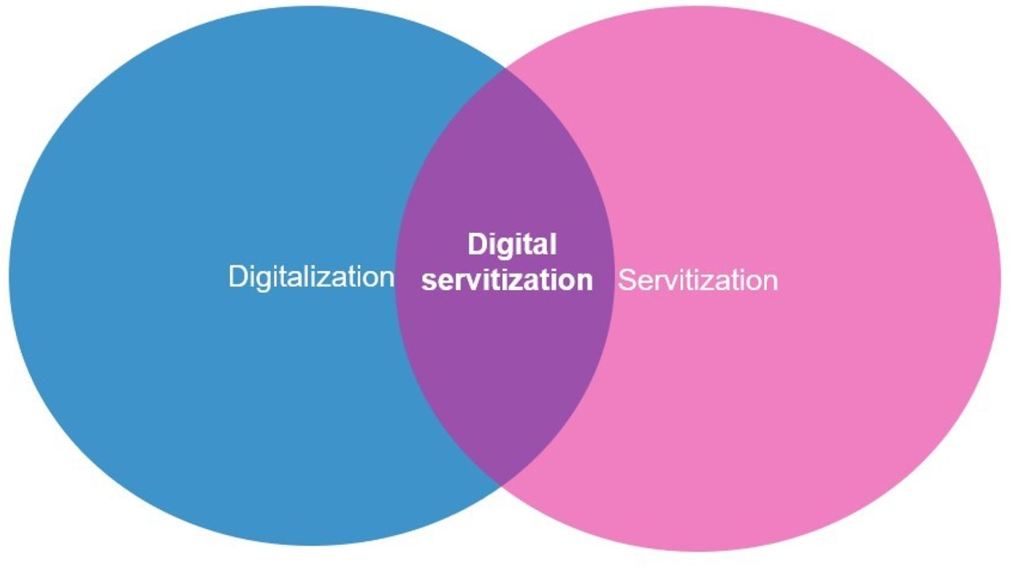
Digitalization brings also a new view point to servitization: “Digital servitization is viewed as the use of digital technologies to create an appropriate value from product-service offerings; thus, digital servitization is understood as the interplay between digitalization and servitization” (Kohtamäki et al., 2020).

Research indicates that digitalization of manufacturing without servitization capabilities can lead to negative returns, i.e. digitalization paradox – thus, servitization is needed to create positive financial performance from digitalization (Kohtamäki et al., 2020). That is, even though you would have fantastic digital service product, without servitization activities it may be difficult to bring a new solution to markets successfully. 

The digital servitization journey may not always be straightforward, due to many transformations needed in the technologies and commercial models, in different business lines and functions, across country organizations, operating model processes, roles, data and IT tools, and supply chain. 

Combining physical and digital – productizing services vs. servitizing products?

One of the biggest challenges for the manufacturing companies in the digital servitization journey may be to combine physical hardware and digital services and setup up seamless end-to-end processes for running the services.

There may be complex dependencies between the physical hardware components and digital services. Also, in in the world of existing installed based, customers may have a large number of different types of hardware setups. Furthermore, when considering end-users using for example mobile apps, the variety of different types of end user devices may be huge.

If approaching digital servitization from the traditional hardware product view point, commercial model could be to servitize the product, e.g. introduce value added services to offer increased value towards customers. If approaching the phenomenon from the service offering view point, approach could be to productize the service – implement great commercial models and robust processes for the digital services. Both viewpoints are needed, and this is the fun part!

In practice, digital servitization may be seen as a journey to implement digital services and solutions into end-to-end processes: development, deployment and run phase of the digital services needs to be systematically managed.

Focus on customer value – but who is your customer?

For companies working with traditional B2B setup, digital services may introduce completely new type of customer groups. Digital services may be sold for different customer roles and decision making process may vary from the familiar ways. Also the end-user groups may be completely new with new type of support needs. 

In order for customers to invest in digital services, clear customer value should be continuously delivered. Understanding the customer need and use cases, validating the customer value and also ensuring customer success plays a key role. 

How to make it easier?

The recommendation from my MBA study is to develop company methods, practices, processes, tools and governance to enable fast, but systematic digital service development, deployment and a run phase with continuous improvement loop. The process was seen iterative by nature, and digital product, commercial models and end-to-end processes should evolve over time.

As introducing digital services may require changes in many different areas, there is no easy way. However, defining a simple framework including a set of templates and examples may help new teams, while working with commercialization and end-to-end processes. Also creating a common service concept and business model for a group of services, may help with the implementation and ramp up of the services.

In addition to a global view point, also service deployment and localization in the country organizations is extremely important. One model does not fit all, and thus optimizing go-to-market activities in the country is critical. When introducing new digital services, almost all roles in the organization need to be aware of the new offering, many roles are significantly impacted and new capabilities are needed.

Perhaps the most important thing, based on my opinion, is to build new collaboration between different teams, business lines, solution and offering areas and end-to-end process steps. This is not always easy as different functions may have different ways of working, but absolutely necessary and offers incredible learning opportunities!

References:

Baines, T.;Lightfoot, H.;Benedettini, O.;& Kay, J. (2009). The servitization of manufacturing: A review of literature and reflection on future challenges. Journal of Manufacturing Technology Management, 547-567.

Kohtamäki, M.;Perida, V.;Patel, P. C.;& Gebauer, H. (2020). The relationship between digitalization and servitization: The role of servitization in capturing the financial potential of digitalization. Technological Forecasting and Social Change.

Vandermerwe, S.;& Rada, J. (1989). Servitization of business: Adding value by adding services. European Management Journal, 314-324.

From Project Portfolios to Product Portfolios – Focus on Development Outcomes

Strategic development portfolios include often the development of new products and services and the introduction of new offerings to the markets. Traditionally projects have been widely used in new product development, to ensure systematical development process and quality. Today, also agile development practices have become common – instead of focusing on project gates, the focus is on development outcomes – products, services, and sellable offerings.

Do you manage product portfolio, offering portfolio or both?

Product development teams are introducing new products, features, and functionalities via regular product releases – there may be physical hardware components, software, and services included. The product portfolio is also linked to product life cycle management – new products are introduced, further developed, and old ones are retired. In parallel to product portfolio, business teams are also looking into offering viewpoint – how to price, sell, package, and servitize customer offerings.

Definition of products, services, solutions and offering differs from company to company. However, there may be need to manage these different viewpoints:

  • Product roadmap – new product releases, hardware, software and service development, dependencies between development entities, enabling product deliveries via the supply chains and service operations
  • Offering roadmap – sellable offering towards different customer segments, which may be bundles of physical product features and services combined with new pricing and business models

Sometimes these viewpoints may be the same, but often both are needed in parallel. Even the best product will not be a success without good commercialization work and the other way around – even though the business model would be perfect for the new offering, if the physical product does not meet customer requirements, the offering will never be successful.

In large global companies, offering may also vary significantly from geographical area to another, from country organization to another. Furthermore, the needs for offering development may vary from area to another, and also when planning and prioritizing new offering and product development, different types of roadmap views may be needed.

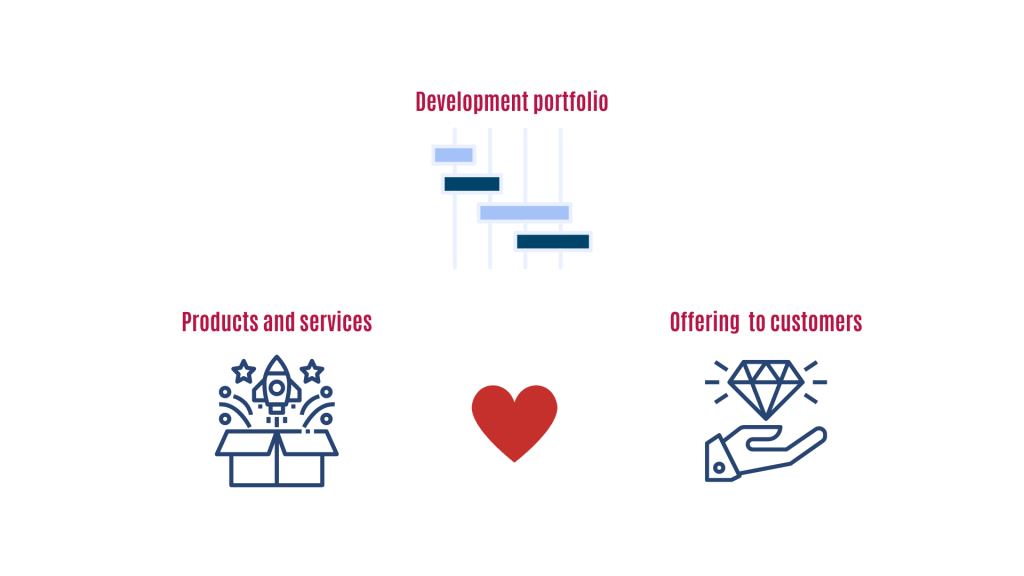
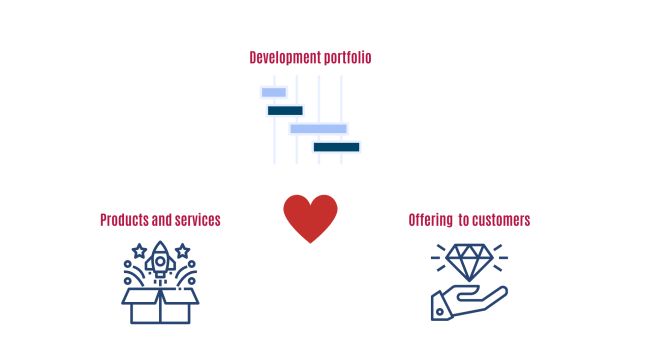
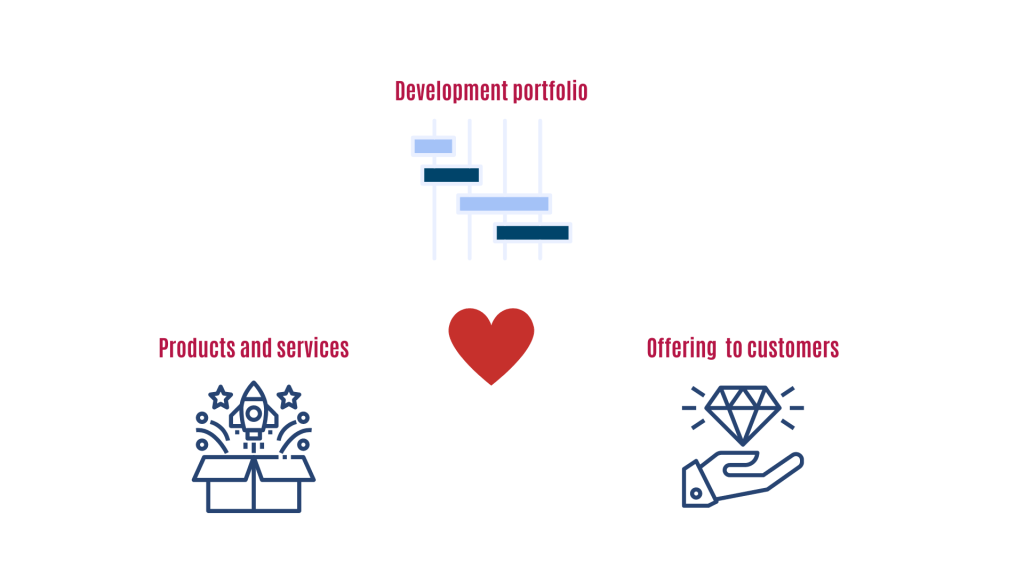
Linking development portfolio closely to development outcomes – products and services and offering

New product development portfolio management

In the context of scientific literature, new product portfolio management is its own field of study. Cooper et al. (2002) define new product development (NPD) portfolio management with similar terms as portfolio management is typically defined:

Portfolio management is a dynamic decision process, whereby a business’s list of active new product (and R&D) projects is constantly updated and revised. In this process, new projects are evaluated, selected, and prioritized; existing projects may be accelerated, killed, or de-prioritized; and resources are allocated and reallocated to the active projects.

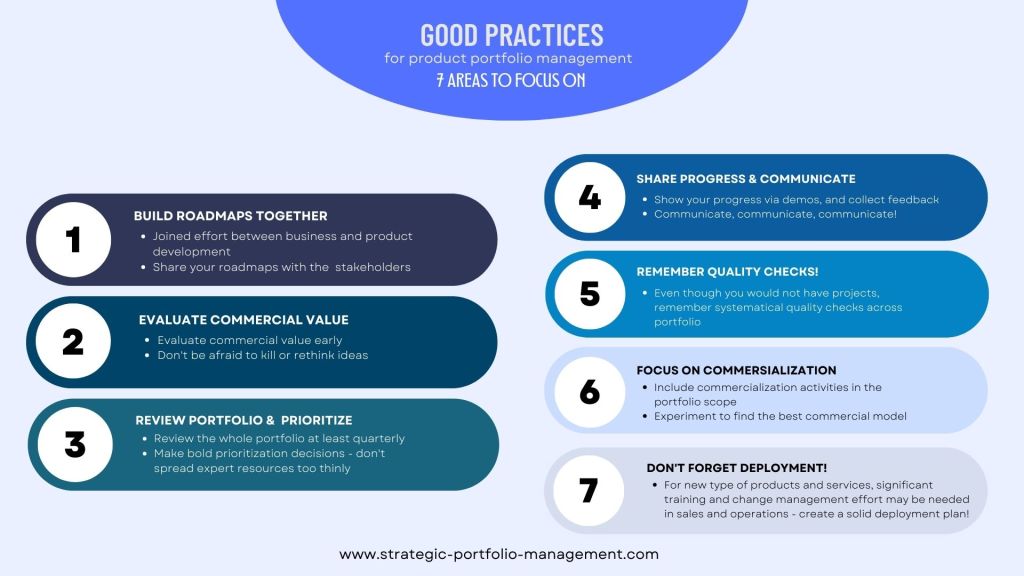
Good practices for product portfolio management

I will list key things, which I learned are really important, when managing development portfolio including new products and services – I hope these are useful for you:

  • Build roadmaps together – building a roadmap is a joint effort between business and product development teams. Even though part of the content may be confidential or secret, sharing roadmaps with the key stakeholders is really important to create alignment.
  • Evaluate commercial value early and do not be afraid to kill or rethink ideas. Sometimes it is difficult to make a killing decision, but this is part of good portfolio management. Service design can provide great tools to understand customer needs better.
  • Regular prioritization – review and prioritize your product development portfolio regularly. Monthly or quarterly cycles work well in many organizations. Make bold prioritization decisions – if you try to do too many things at the same time, expert resources may be too thinly spread around impacting negatively your portfolio success.
  • Create transparency via demos and regular communication – show your achievements and share progress with your stakeholders, and leadership – and receive feedback!
  • Remember quality checks – even though development would happen via agile product development and project quality gates are no longer applied, ensure certain quality checks are done systematically across all products in the portfolio and quality checks are inbuilt into your process.
  • Focus also on offering development and commercialization – even the best product will not be successful without good business model. Experiment and learn what works – for example growth hacking has great tools for this part!
  • Don’t forget deployment! If you are introducing completely new types of products or services with new business models, significant process and tooling development, as well as training and change management effort are needed. If you are introducing incremental changes to existing products, remember still the importance of great communications materials to make best out of your product releases or launches!
Good practices for product portfolio management – 7 areas to focus on

Additional reading

Cooper, Edgett, Kleinchmidt: Portfolio management for new product development: Results of and industry practice study, December 2002, R& D Management 31(4):361 – 380

Jarno Vähäniitty’s doctoral thesis from 2012 was focusing on agile product and portfolio management. Literature review and results provide good insights:

Jarno Vähäniitty: Towards agile product and portfolio management, 2012, Aalto University publication series DOCTORAL DISSERTATIONS, 15/2012

Extra tip for additional learning: Explore and Exploit portfolios from Strategyzer – The Invincible Company

Check out also Strategyzer – The Invincible Company Explore and Exploit portfolios!

I will later come up with a post focusing more on literature related to new product development portfolio management and one of my favorite topics – servitization and developing complex hardware-software-service systems!

Do you want to get the latest blog updates to email?

Processing…
Success! You're on the list.