Creating portfolio transparency – how to create meaningful portfolio structures?

Communicating about development portfolios is often tricky – there may be a lot of ongoing development projects and activities, and if there are no portfolio structures, such as programs grouping projects, it is difficult to present high-level portfolio updates. The last blog post was focusing on designing portfolios in Enterprise level – let’s now focus on a single portfolio design and meaningful portfolio structures.

Here are a few tips which have been helpful for me and my colleagues!

Portfolio level – Large single portfolio, or multiple portfolios?

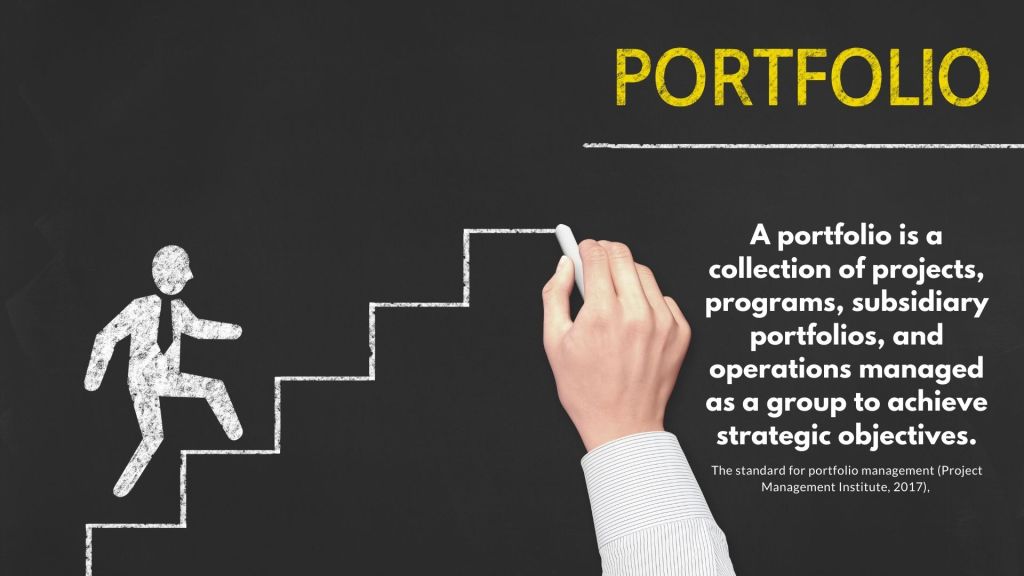
By definition A portfolio is a collection of projects, programs, subsidiary portfolios, and operations managed as a group to achieve strategic objectives (The standard for portfolio management – Project Management Institute, 2017). The definition is quite wide and each portfolio needs to define how to structure the development happening within the portfolio with a meaningful value adding way.

Sometimes portfolios may develop content across businesses, but also quite often there are own development portfolios for different businesses and functions. In addition to business-driven portfolios, often large development organizations, such as R&D and IT, also have their own portfolios. These portfolios may have own strategic targets, or work may be delivered to one of the business portfolios by the technology units. Also global functions, such as marketing or finance, often have their own development portfolios. First thing to consider is, do you manage a single portfolio, or would you have actually multiple portfolios with different objectives in the scope of discussions.

Sometimes there are clearly defined project portfolios, a group of individual projects, without any need for program structures – and this is completely fine, too. When dealing with larger portfolios, it makes sense to manage group development activities as sub-portfolios, programs, strategic initiatives, or via value streams. Let’s review different options:

Sub Portfolio – Grouping of development based on unit, department or theme

Let’s start with sub portfolios!

For large development portfolios, sub portfolio structures truly make sense – there is just too much different types of contents to be managed with flat hierarchy. On the other hand, for smaller portfolios, splitting content too much may create additional bureaucracy and silos within organization – so please be careful with the design!

Here are couple of tips for large portfolios with different types of development contents:

  • Sub portfolios for different units: Do you have have a big development portfolio developing content for different units? For example, if your portfolio is focusing on development within global functions, development content within marketing, finance and IT would deserve to have own sub portfolios to keep the content well grouped and managed.
  • Department level sub portfolios: For big business portfolios, does it make sense, to create a sub portfolios for development work different departments are focusing? Sub portfolios may help to create structure and show logically development projects focusing on development of each area. Sub portfolios may also serve well for allocation of funding and governance, if decision makers and key stakeholders vary a lot. Also, one very important aspect is the resourcing – each department needs to have a clear view of all development they need to resource.
  • Strategic theme based sub portfolios: Do you have big investment areas including multiple interlinked programs you need to present together? Sometimes sub portfolio may be also created based on the strategic development themes, to be able to easier follow up on

Development Programs – managing complex dependencies

Development programs are widely implemented across various industries as a common and well-known approach. The fundamental concept behind programs is to consolidate interconnected projects with shared objectives into a unified program, which can be managed as an entity. One particularly appealing aspect of development programs is the incremental delivery of benefits, as individual projects or activities within the program are completed over its duration.

Sometimes projects and other development activities within program have complex dependencies – and the completion of one activity may be a prerequisite for another. One of the benefits with program structure is the possibility to manage dependencies systematically – this is especially important, if development is happening across different organizational units.

Some programs may have more loosely interlinked projects based on a certain theme or topic – this could be for example projects linking to the same technology. Also the investment decision approach may vary – if each project within the program has an own business case, investment decisions can be made also incrementally over time – this helps to get things started, when in the early phase investment approval is only for the first scope items.

Strategic Initiatives – aiming at reaching strategic targets

Strategic development portfolios often encompass strategic initiatives, such as large transformation projects, strategic technology programs, must-win battles, or major product development initiatives. These initiatives are typically characterized by a strong focus on outcomes, aiming to develop new offerings, introduce new business models, or enhance organizational capabilities.

Sometimes strategic initiatives are governed as an entity, with a clear funding, steering and reporting practices, but often there is more loose practice, mainly focusing on strategy implementation progress – development is happening within each responsible organization. What ever the structure you may have, creating transparency on strategy implementation progress is usually a must have need!

Value streams

Today, value streams developing end-to-end chains delivering customer value have become popular, especially when enterprise agile practices are widely used in the organization.

Some portfolios are fully organized around value streams, and in a sense, value streams may be seen as mini-portfolios. There is typically a higher level decision-making on the portfolio level, but also teams working within value streams are empowered to make decisions about content prioritization. If you want to learn more about portfolio approach using value streams, Scaled Agile Framework Portfolio pages include great examples.

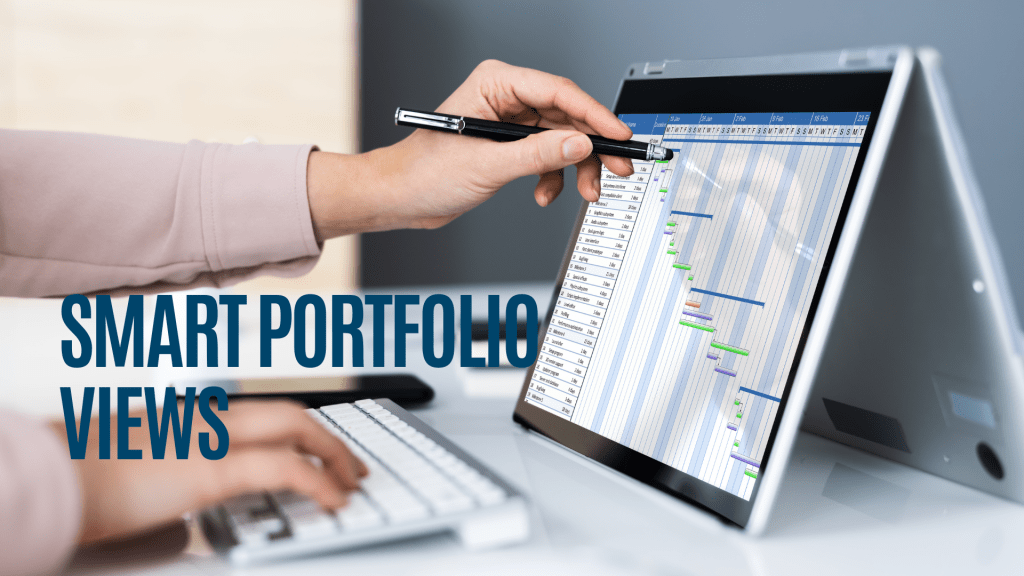
Smart portfolio views – other portfolio grouping attributes

In addition to official portfolio structures, such as Sub portfolios or Programs, there are often also other needs to create views of development portfolio content. Optimally, your portfolio management tool may help with this, to avoid maintaining roadmaps for different purposes.

These are the commonly needed views I have come across to:

  • Department or unit work view across development portfolios – what are the projects and other work ongoing with your own unit? Which projects are you leading, where are you contributing and your team member contribution is needed? This view is especially important for common functions, such as IT departments or marketing, where there is always high demand for your experts time, and need may be coming from many different portfolios.
  • Strategy view – which development initiatives across all portfolios are contributing to a strategic theme or must win battle? There is often strategy progress reporting also consolidating status from different units, and great approach is to link strategy reporting to development portfolio reporting to avoid double reporting.
  • Product line, Platform or Solution area roadmap view – also a typical need is search for all development initiatives linked to a certain Product line, Platform or Solution area. With this view it is possible to manage development dependencies for a certain area.

Backlogs and my own tasks…

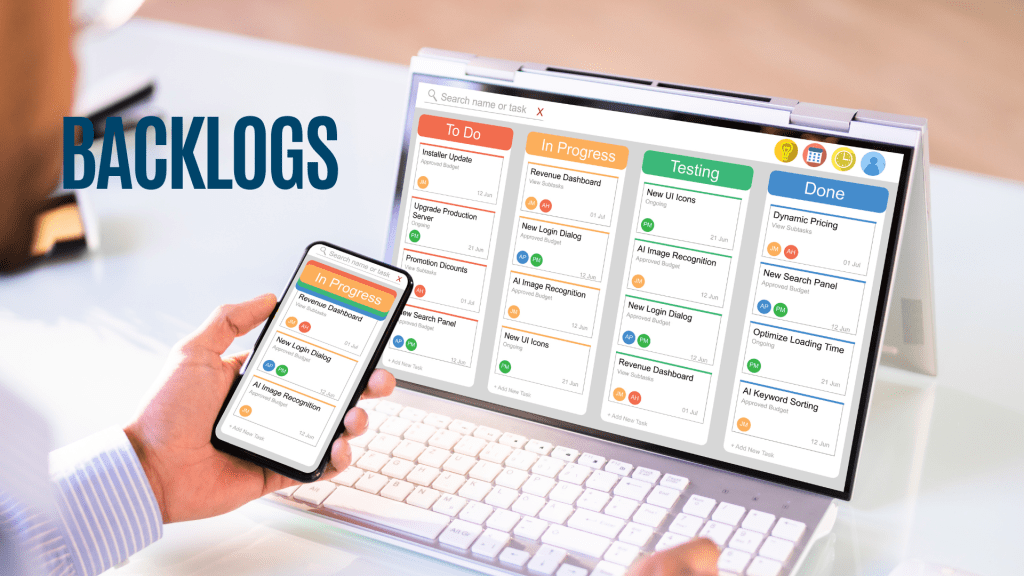
The need for managing the work does not end to portfolio level. Development teams have needs to manage their own roadmaps, backlogs or Kanbans – and the same applies to all of us – we need to manage our own tasks systematically. We all hate, if we need to create additional documentation manually to report our progress – and here is an opportunity to use integrated portfolio and backlog management tools.

If you have possibility to use the same set of tools within company – managing work from different projects or areas may become easier for the individual, when all tasks can be found from the same tool. The same applies also for the portfolio level – especially for agile development, creating transparency on progress of roadmap items is crucial. Many portfolio management tools today enable integration or have great inbuilt functionalities for managing backlogs.

If you are interested to learn more, check these out:

The standard for portfolio management – Project Management Institute, 2017

Development portfolios in large companies – what is your viewpoint?

Designing Development Portfolios in Enterprise Level – What is your approach?

Scaled Agile Framework Portfolio pages

Designing Development Portfolios in Enterprise Level – What is your approach?

New business strategy, big organizational or operating model change, or merge of companies may lead to a need to redesign the development portfolio structure. Also, the introduction of Lean and Agile ways of working may impact portfolio design. Let’s check out different options for Enterprise level designs, and also some key topics to consider when planning the setup:

Portfolio structure based on business units and functions

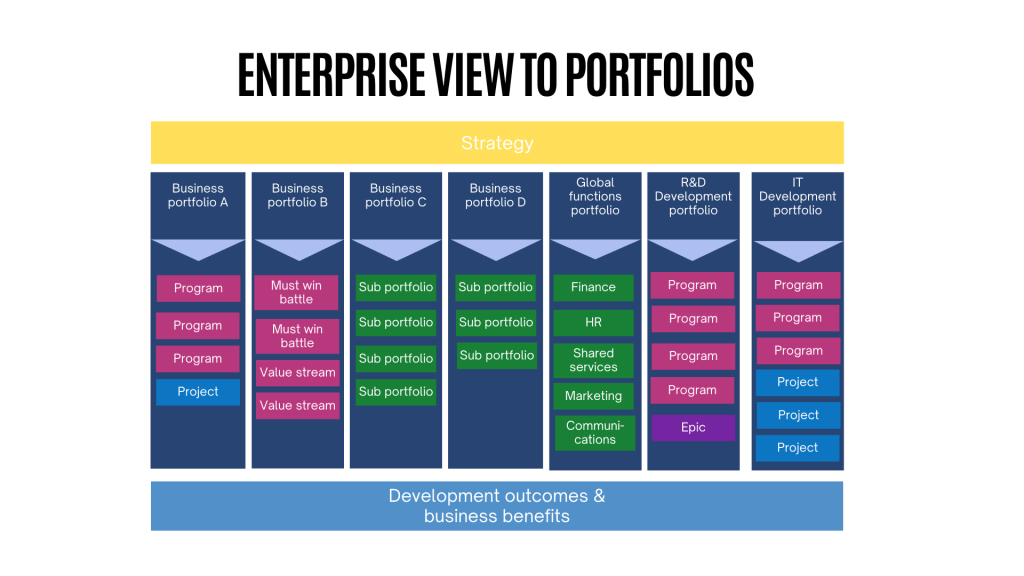
A common way to get organized around development portfolios is to organize development into development portfolios owned by different business units and functions. This has been also a traditional ways within project portfolios – different units manage their own development portfolios taking business unit strategy into action. With large businesses, portfolios may be also slit to sub portfolios owned and managed by different departments, as the development content may vary a lot. Within business portfolios, development may be organized around projects, Programs, strategic initiatives, such as Must win battles.

Also global functions, such as HR and Finance often have own development portfolios, developing cross business capabilities. When the development is organized based on the ownership of work, also R&D and IT have their own development portfolios.

The model where development is organized around units works well, when each unit have clear roles and responsibilities in the strategy implementation, and development content does not typically requiring work from many other units.

Key points to consider in the enterprise portfolio level: is development happening across different unit portfolios aligned to take the strategy action optimally? Is there enterprise level transparency on key initiatives? How do you follow up on strategy implementation?

Let’s check out also other ways to get organized!

Cross organization transformation programs

When developing content which requires contribution from many different units and teams, there is no single clear owner in the organization and development outcomes impact the whole company, a common approach is to get organized around cross organizational transformation programs. Typical examples of such implementations may be for example ERP or CRM implementations impacting business processes, operating model and IT solutions for many different units.

Setting up governance, resourcing and way of working for such transformation programs require a lot of alignment – how are each unit contributing with the resourcing, who makes the decisions, who has the budgets? Do you have an enterprise level portfolio for these strategic transformations, or is one of global organizations owning the initiatives?

Key points to consider in the enterprise portfolio level: are several large transformative initiatives ongoing at the same time, and could the initiatives be sequences to ensure success of critical ones? How do you manage the governance to make transformation successful?

Value stream based portfolio structure

Today more and more development is organized via agile development. I happed to check out Scaled Agile Framework 6.0 last weekend, and there was a really nice Portfolio site added to the framework: Portfolio – Scaled Agile Framework. In the Scaled Agile Portfolios, development is organized around Development Value streams, and portfolios are organized around value. I like the thinking, to optimize the flow – however, this is a big change in thinking from the traditional way of organizing development into unit or function development portfolios. There are great examples, among others of business unit, regional or innovation portfolios within the sites, so check it out, if this is useful for you.

Key points to consider in the enterprise portfolio level: how is agile development visible in your development portfolios? Are you organized around value or around functions?

Optimizing the use of capacity

One of the key challenges for many professional development organizations, such as IT teams and R&D is how to optimize the use of capacity. Especially in the models, where IT development is distributed in many different business unit organizations, there may hundreds of projects ongoing with different types or resourcing needs from the same teams – and the there are typically few experts who’s contribution would be needed in many projects at the same time. How can a resource manager make the decision which initiative should get the results? Is it based on who shouts loudest?

Key points to consider in the enterprise portfolio level: how do you create transparency and prioritize work from different portfolios? Do you have too many smileys in the pipeline, considering the expert resources you have?

Managing cross portfolio dependencies

When development is happening in multiple development portfolios simultaneously, there is a danger of developing simultaneously similar solutions without alignment – leading to waste. There may be also complex dependencies between different initiatives, via common enablers, shared technical components or key resources. Creating transparency and alignment may require sharing sessions, discussions and sometimes also common portfolio management tools may also help.

Also enterprise architecture team plays a key role here – when the development is becoming more and more complex, someone needs to look into the solutions at the company level – to find synergies, to use common building blocks, and to avoid sub optimal solutions.

What does enterprise architecture have to do with enterprise level portfolios? Well, today, when development content has become increasingly complex,

Key points to consider in the enterprise portfolio level: Are development portfolio dependencies managed actively to see synergies between different initiatives? Is enterprise architecture team looking across all development portfolios to ensure smart decisions for the whole organization are made when developing IT and digital solutions?

Recommended reading

Portfolio – Scaled Agile Framework

You might be also interested in one of the previous blogs:

Development Portfolios In Large Companies – What Is Your Viewpoint?

Finding The Balance – Centralized vs. Decentralized Portfolio Management

Strategic Portfolio Management, part I

Principles of Good Portfolio Governance

Development portfolio governance is one of the areas, which might cause headache in in many organizations. I wanted to have a look at the what standards say about the good governance, and reviewed briefly ISO 37000 – Governance of organizations standard focusing on governance principles. The standard may be applied for any type of organizations, and I think the guiding principles are also good food four thought for portfolio governance.

Primary governance principle – Purpose

Primary governance principle in ISO 37000 is the Purpose – there needs to be a clear purpose why organization exists and the same applies also for development portfolios. What is the purpose of the portfolio? What is the reason of existence from different perspectives?

Clear purpose statement defines, specifies and communicates the value the portfolio intends to generate for specified stakeholders. Clear purpose is really important: to be able to communicate the purpose & WHY portfolio exists.

Supporting questions:

  • Have you defined a purpose for your development portfolio?
  • Have you communicated about the purpose with different stakeholder groups?

4 Foundational Principles – Value Generation, Strategy, Accountability and Oversight

Next, standard defines 4 Foundational Principles. Let’s look into those, too.

Value Model – the elements comprising value creation and value generation which are required to fulfil purpose. Value generation model provides basis for innovation and also for collaboration with the stakeholders.

Supporting questions:

  • What value is the development portfolio creating to customers, business, organization, and even in a wider context to other stakeholders?

Strategic development portfolios should be by definition, strategy driven. One of the foundational principles for governance is Strategy – engaging strategies in accordance with the value model.

Supporting question:

  • Is your portfolio strategy driven?
  • What does the company strategy mean in practice for your development portfolio?

Accountability – Accountability engenders trust and legitimacy, which leads to improved outcomes. Those responsible for managing the portfolio must be held accountable for their actions and decisions. This includes ensuring that there are clear lines of responsibility and authority, as well as systems for monitoring and evaluating performance.

Supporting question:

  • Are the roles defined clearly for your portfolio, so that accountable members know their responsibilities?
  • Do you systematically create transparency across the stakeholders on your development portfolio progress and plans?
  • Do you actively engage stakeholders?
  • Do you collect feedback and improve ways of working systematically?

The Fourth Foundational Principle Oversight is important to ensure the governance is appropriately designed and operating as needed. This principle is overseeing portfolio performance and enduring portfolio is fulfilling the expectations. As a good practice, there is an internal control system implemented for oversight.

Supporting questions:

  • Do you have a definition for your portfolio governance model available for different stakeholders?
  • Are the stakeholders aware of your governance model?
  • Are you following up, that governance model is used in practice? What happens, if there is an exception?
  • Do you have clearly defined guardrails for financial decision making and internal control system it is followed?

6 Enabling Governance Principles

ISO 37000 standard includes also 6 Enabling Governance principles: Stakeholder engagement, Leadership, Data and decisions, Risk Governance, and Social Responsibility. I will review also these in the context of development portfolios!

Stakeholder engagement – Member, reference, and relevant stakeholder engagement are key. Transparency is a key element of effective governance, and stakeholders must have access to information about the organization’s goals, strategies, and performance.

Supporting questions:

  • Who are your development portfolio key stakeholders?
  • How do you engage with the different stakeholder groups?
  • Do you create transparency on development portfolio plans, progress and outcomes?
  • Are you meeting the expectations of different stakeholder groups?

Leadership – The governing body should lead by example to create a positive values-based culture, set the tone for others, and engender trust and mutual cooperation with the organization’s stakeholders. Effective governance requires strong leadership, with clear roles and responsibilities defined for all stakeholders involved.

Supporting questions:

  • Are you leading by example?
  • Is the portfolio decision making ethical?
  • Is the portfolio decision making efficient?
  • Are you creating an positive environment, building trust and good cooperation with the stakeholders?
  • Are you following company leadership principles also in the context of the development portfolio?

Data and decisions – The governing body should ensure that the organization identifies, manages, monitors and communicates the nature and extent of its use of data.

Supporting questions:

  • Is your portfolio data up-to-date, e.g. the project schedules, approved budgets and business cases?
  • Do you use actively data in the portfolio decision making?
  • Do you maintain presentation materials and meeting minutes for the portfolio governance body?

One of the goals of portfolio management it to maximize the portfolio value – this also requires taking some risks. Governance is not just about compliance. It is about managing risk in a way that ensures the long-term success of the organization.

Risk governance – Value is generated when appropriate risk is taken, transferred or shared in a timely manner. This happens when the governing body balances risk effectively.

Supporting questions:

  • Are you reviewing portfolio risks regularly?
  • Do you have clear practices, for mitigating risks and reporting risks?
  • Are you balancing the risks?

The guidance explains what good governance looks like across eleven mission critical topics:

Social responsibility – The organization should proactively contribute to sustainable development by generating value in a manner that meets the needs of the present without compromising the ability of future generations to meet their own needs.

Supporting questions:

  • Are the decisions made ethical and considering also the social responsibility?

Viability and performance over time – portfolio should ensure viability over the time without compromising current and future generations.

Supporting questions:

  • Are the decision made today enabling also the future success?
  • Is portfolio balanced across time horizons?

By following these principles, developmen portfolios can enhance decision-making processes, manage risk more effectively, and achieve long-term success.

References

ISO 37000 – Governance of organizations standard