
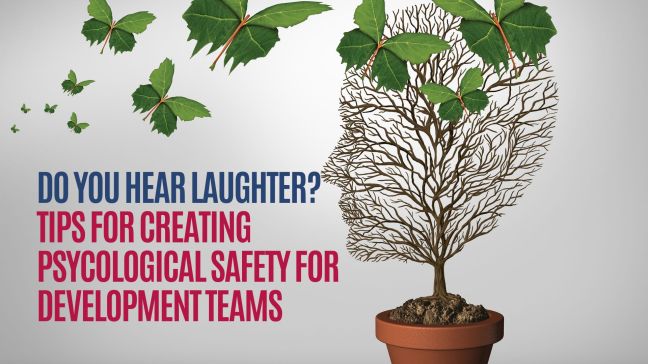
Project work and developing new products and solutions require a lot from the teams – there may be complex problems to be solved, challenges to get started with the new initiative, stretched timelines to meet, and different types of needs coming from many different stakeholder groups. But even though development work is often very demanding – the best teams still manage to have fun together and achieve a lot!
I am part of my workplace Grow training this autumn and got inspired by the psychological safety theme – here are some reflections on how psychological safety can help Development portfolios perform better!
Making things happen – and having fun in the team level

I am a big fun of Amy Edmondson – and her Creating a Fearless Organization. Based on Amy Edmondson, Psychological safety is not about being nice, avoiding conflicts or an excuse to complain, but creating an environment where development teams have high performance standards, but still feeling safe enough to speak up about mistakes and concerns – and being unafraid to bring up also ideas and questions.
Based on my experience, best performing teams make things happen, but also still manage to have fun. For me, it is always a good sign, when I hear laughter from the development team. When the team has fun together, is also easier to bring up difficult topics, and also find the solutions. Best teams have also fierce debates, as the aim is to find the best solutions. And not to forget wild ideas, which can be enhanced and enriched together as a team.
Inviting to participation – across the organization
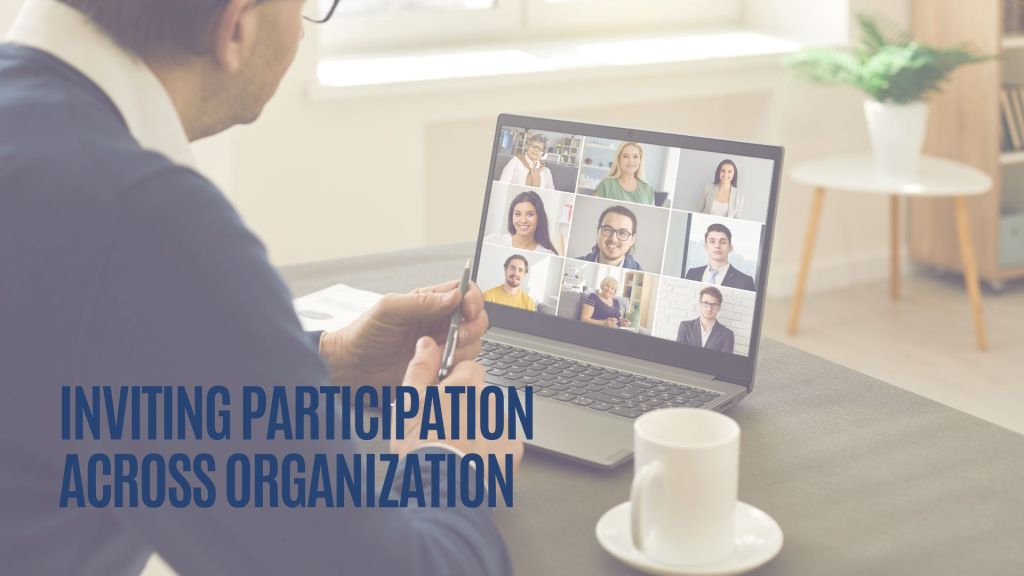
When developing complex solutions impacting the work of different business units and end-to-end processes, a significant amount of communication and alignment across the organization is needed. Does the development team feel safe when introducing new ideas and concepts with the stakeholders? How is the feedback given and received?
As a lead of a strategic initiative, there may be many stakeholders groups to be alignment with – and a need to build new connections between the units, which have not been earlier collaborating actively. The way of working, terminology and tools used may differ, and there is a big risk of misunderstanding. Here it is important to keep the big picture, but also actively align with different stakeholder groups, listen and use the feedbacks actively to improve the final outcomes. Are your workshops safe environment to give feedback, bring up ideas and debate?
As a stakeholder of a strategic initiative, it is important to offer support for the development team, even though topic might be new to you, and you may feel uncomfortable to certain extend. Listening actively, and trying to connect the development vision to your own area of expertise is important – and to avoid starting with your own agenda first. Also, bringing up the potential development needs is important, as the development team may not have all the needed knowledge for end-to-end value chain. Are you giving the feedback in a constructive way, which are easy to take into consideration and invite to dive deeper into the topic together?
One of the clear trends I have seen in many companies, is to reduce the amount of steering meetings, and increase the amount of sharing via other means. Great practice widely used by agile teams is to organize demos and reviews – seeing concretely what has been developed helps everyone to understand the content, and bring up also development needs.
Psychological safety in portfolio level decision making
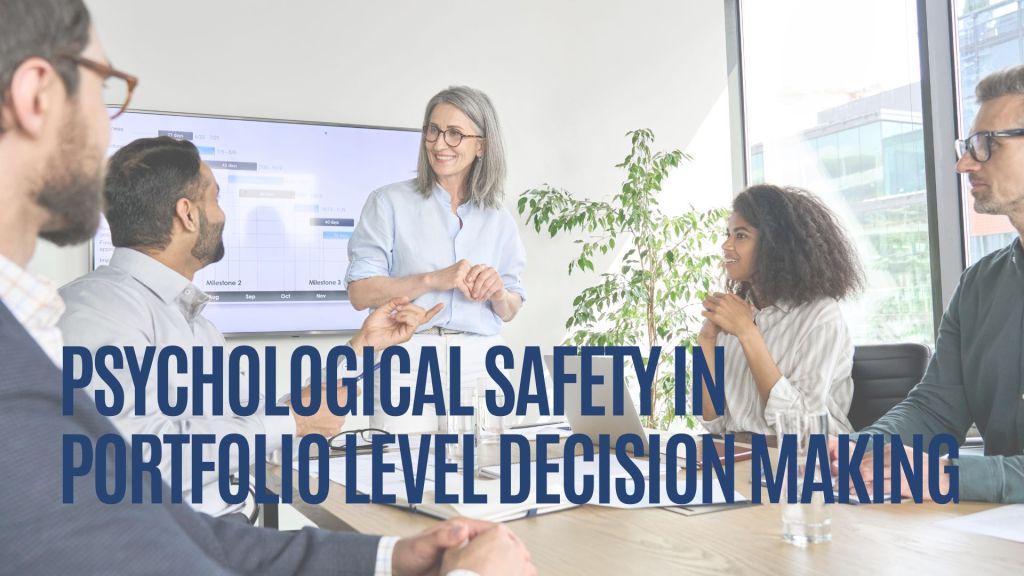
When I was quite fresh from the university, I was working for a large transformation program which had been ongoing for several years. The planned go-live was closing and many team members were really worried about the performance of the solution – as after go-live, the new system could risk the company continuity. When the performance issues were discussed, an experienced management consultant gave an advice: “Senior managers are like sheep, you don’t want to scare them off.”
Well, after all these years I still disagree with that – teams should feel comfortable bringing up also concerns and senior management deserves to get objective and data based understanding. In the end for that specific project, company internal controls worked as they should, and the performance challenges were addressed before the go-live. Oh, what a learning it was for all the stakeholders involved, and big emotions also involved!
Another big ERP implementation project, where I worked, faced a big challenge with technical environments one month prior to go-live. As a program lead, this was not an easy news to bring up, but as a team, we got the full support from the management and all the vendors involved, and the year end schedule was kept thanks to good team work. I think here psychological safety played a key role in that case – discussing openly about the challenge enabled also finding the solutions with all parties.
Here are few tips for portfolio managers and senior management to help the teams:
- Encourage teams to share, organize demos and reviews with the rest of the organization – this helps to create alignment and get feedbacks early. Seeing is believing! Participate, sponsor and create a positive and encouraging atmosphere to these events!
- No news is not always good news – encourage teams to share openly about their progress and seek for alignment – not only within gate approvals, then it might be too late.
- Build flexibility into the decision making – can teams bring up key topics to decision making forum to inform senior management or when guidance is needed?
- Don’t kill the messenger – when something goes wrong, don’t find who to blame, but think ways to support to solve the challenge!
- Hearing laughter during team meetings is usually a good sign – the best teams have fun and also achieve a lot together!
More blog posts related to portfolio governance available here: Development Portfolio Governance.
References
Amy Edmondson – Creating a Fearless Organization – Youtube video
 Strategic Portfolio Management