

This autumn, the blog theme has been service offering development and this week’s blog is focusing on transition from product orientation to service orientation. From the strategic portfolio management viewpoint, building a solid service offering portfolio truly makes sense – let’s review key reasons why (especially) manufacturing companies are shifting more and more towards services and also the most important steps how to get there:
8 Key Reasons for Moving Towards Service Oriented Business models
Revenue generation – from one time product sales to continuous revenue streams

Service business is typically good business – instead of relying on one-time transactional product sales, services may provide steady and growing revenue streams through service contracts, subscriptions and additional transactional service offerings. The recurring revenue models provide also more stability and predictability when compared to the traditional product-based models.
Building competitive advantage – and avoiding commodity trap
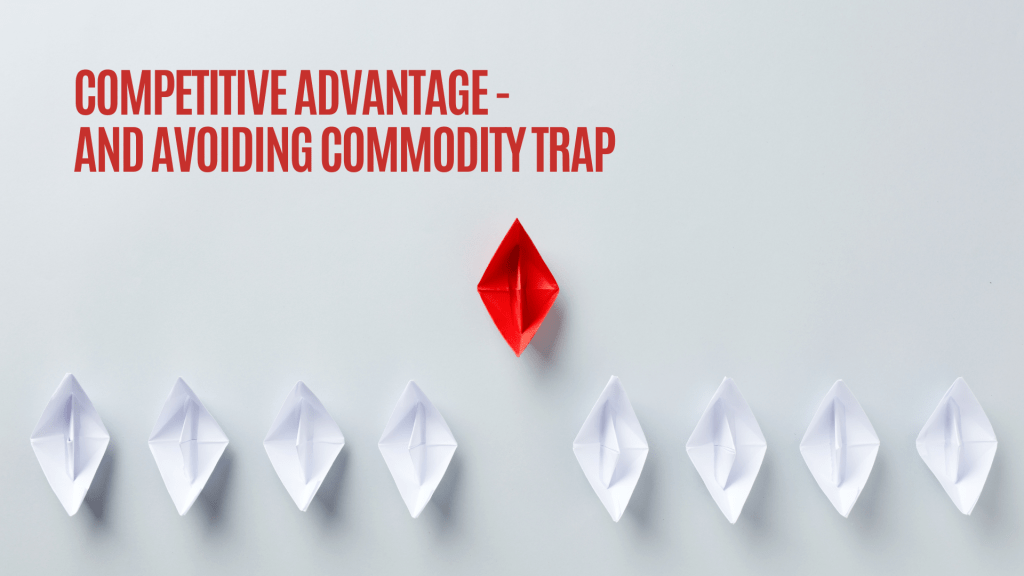
Today, markets are highly competitive, and manufacturing companies are looking ways to differentiate. New types of value adding services are often helping to differentiate from competitors competing with lower prices. Services built into the operating model of the company are not as easy to imitate or copy, as the the traditional production of hardware based components.
Value adding services for unique customer experiences
Offering value-added services alongside their products allows them to stand out and provide unique customer experiences. Additional value may be created in many different ways, for example:
- Via highly reliable delivery and installation
- Integrations between the company core systems
- Easy to deal with service concepts
- Providing new type of data based services with insights
- Digital services with new unique features built on top of physical products
Value adding services help to build stronger relationships with customers and creates a competitive advantage that is not solely based on the physical product.
Increasing customer satisfaction and retention

By offering services complementing the products, manufacturing companies can enhance customer satisfaction. Services such as installation, maintenance, repair, and training can improve the overall customer experience and ensure that the products perform optimally throughout their lifecycle.
This, in turn, leads to higher customer loyalty, repeat business, and also to positive word-of-mouth recommendations.
Adapting to changing Market Demands

Many customers today prefer outcomes and solutions rather than simply buying products. By offering services that address specific customer needs and challenges, manufacturing companies can align themselves with market demands and provide comprehensive solutions that go beyond the product itself.
Supporting customer sustainability targets

Service-oriented approaches often contribute to a more sustainable business model for manufacturing companies. For example extending the lifecycle of products through life-cycle services such as repair and refurbishment or product upgrades, may reduce significantly environmental impact. Also for example selling as service business model may help to offset the financial costs of implementing more sustainable solutions
Leveraging opportunities enabled by technology

Today, technology enables new solutions including for example predictive maintenance, remote monitoring and other proactive services, which can help to optimize product performance and efficiency and also minimize downtown. Key enablers for such services may be the Internet of Things (IoT), sensors based solutions increasing the availability of data, connectivity solutions, and different types of integrations and interfaces. Also Artificial Intelligence enable more automation and value adding insights.
Value via Ecosystems and Networks
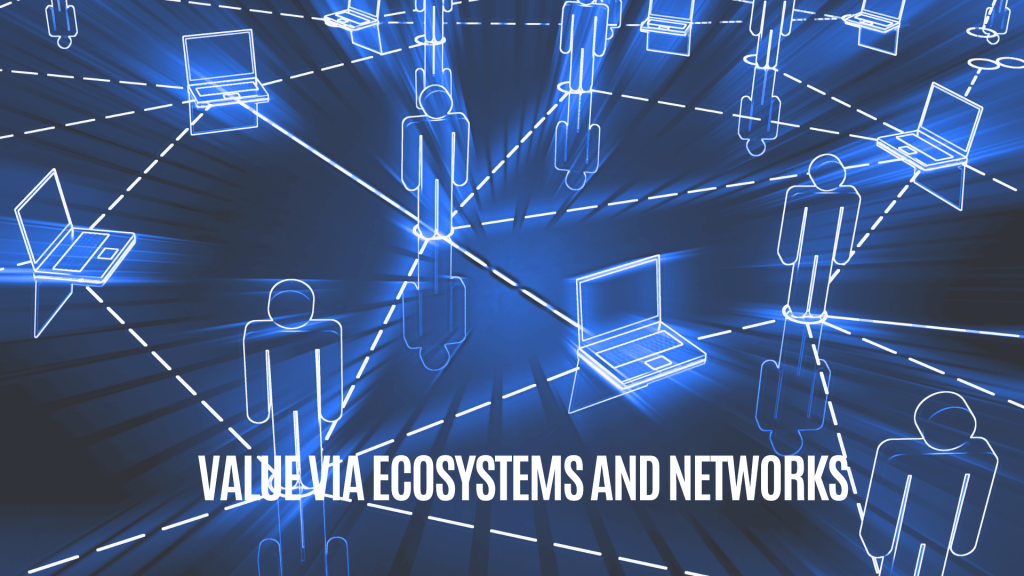
Ecosystems and value networks play a crucial role in the service orientation of manufacturing companies. By participating in ecosystems and building value networks or even leading one, manufacturing companies can leverage the expertise and capabilities of other entities within the network creating value add to customers.
5 steps when moving from product orientation to service orientation
When transition from product orientation to service orientation, there are significant impacts also in the strategic development portfolio, operations, way of working and even in organizational setup. I would recommend to get familiar with a super good article written by Daniel Kindström: Towards a service-based business model – Key aspects for future competitive advantage. Here are some key takeaways I picked up from the article to support moving from product based to service oriented approach:
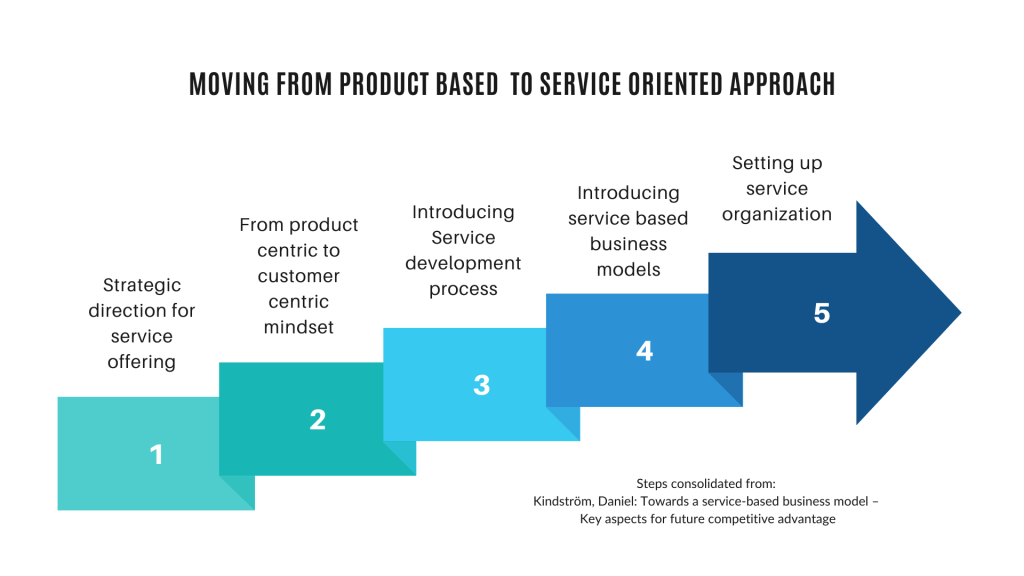
- First of all, strategic direction for service offering is required – are you complement the product based offering, creating completely new type of digital services, or what type of services and customer value do want to focus on?
- The mindset shift from product centric to customer centric approach is required when working with new service offering concepts solving customer problems. This may be a long journey for many organizations with long traditions of building world class hardware products.
- The service development process differs from product development process – what is your process to develop services? Do you need to develop both product based offering and services together?
- Introducing service based business models – what is it for customers, what are the value propositions and how is the revenue created? Is the model transactional, agreement based, selling as a service / subscription based, or is the value created via the partner ecosystem…?
- Setting up service organization – who is delivering the service? For example, do you need to setup new processes and roles, when supporting new digital services? Do you need to create a network of partners and vendors to support your services?
Overall, the move towards a service orientation allows manufacturing companies to go beyond the traditional transactional model and build long-term relationships with customers. Services provide opportunities for revenue growth, customer satisfaction, and adaptation to evolving market dynamics, ultimately leading to a more competitive and sustainable business.
However, also new capabilities, ways of working, business models and even organizational structures are required – introducing a new service offering may require development and change management in many different levels. The service-based business models would deserve an own blog post, so stay in the loop!
References
Kindström, Daniel: Towards a service-based business model – Key aspects for future competitive advantage. European Management Journal (2010) 28, 479-490.

